Discovering Hacienda San Antonio in Comala – #MexicoJourney

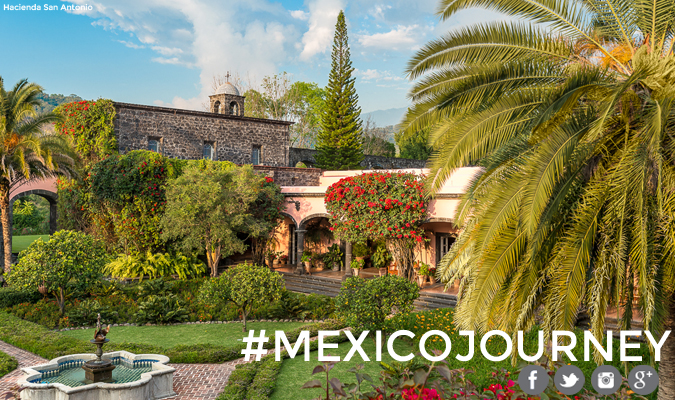
Set at the foot of two volcanoes in Mexico’s picturesque highlands is the historic Hacienda San Antonio.  Because of its off the beaten path location near the Magical Town of Comala (about 3 hours outside of Guadalajara), Hacienda San Antonio is one of the most exclusive getaways in Mexico. On our recent #MexicoJourney, we stopped to enjoy two whole days at this property where we learned the Hacienda, which is indeed a luxurious hotel, is also an all-encompassing experience  with plenty of activities to do right on property.

The Hacienda, completed in 1890, was established by Don Arnoldo Vogel, an immigrant from Germany who found that the cool highland position of his land was ideal for growing Arabica coffee. The Hacienda was successful as a coffee producer and the reputation was so esteemed that it was exported to the German Imperial family. Upon converting the Hacienda to a hotel many decades later by Sir James Goldsmith, the goal was to provide a “living Hacienda” experience by exposing guests to many aspects of regional art, cuisine, traditional music,  natural surrounding beauty and various recreation activities.

hacienda-san-antonio-mexicojourney-9

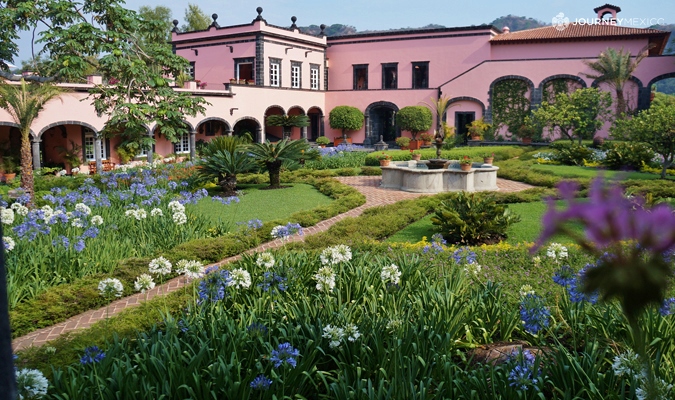
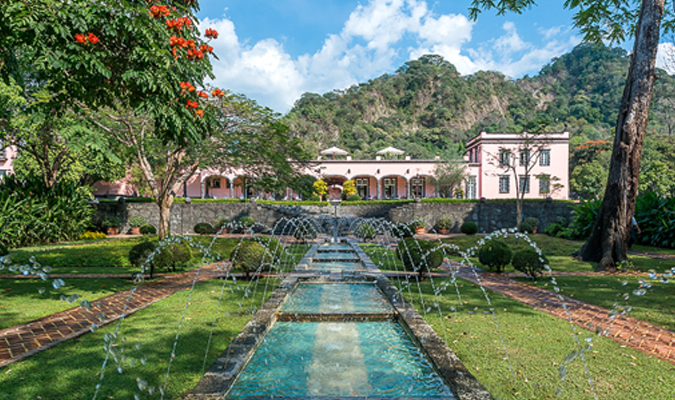
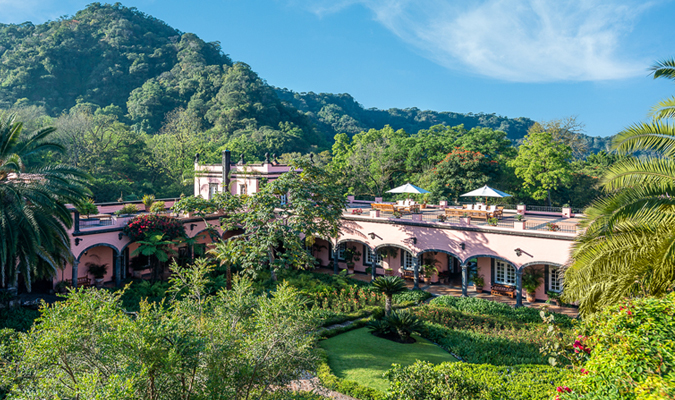
Upon arrival to Hacienda San Antonio, its remote location becomes reality—guests pass straight through town(aka civilization), lose cell phone signal, and continue down a private forested entrance that seems never-ending. While being “off the grid” can be frightful to some, any hesitation is immediately put at ease when a spirited pink stucco’d mansion and meticulously gardened lawn appear in the distance. Many of us let out a sigh of relief as we saw the staff waiting outside, waving vigorously with emotion ready and prepared to welcome the group with a refreshing drink.

The process at this Hacienda is not traditional to most hotels. There is no formal lobby or check-in procedure because the staff are already waiting with key in hand prepared to escort guests straight to one of the 25 suites. The rooms, decorated simply with a majestic 18-century touch, also incorporate regional arts and crafts from Mexico;  talavera pottery from Puebla, hand woven spreads from Chiapas, and enormous crafted rugs from Oaxaca can be found in each of  the suites. A warm fireplace for the winter months makes for a cozy atmosphere while the double pane glass doors open up for a cool breeze during the summer. Many of the suites enjoy the sound of the fully-functional aqueduct that the property uses.

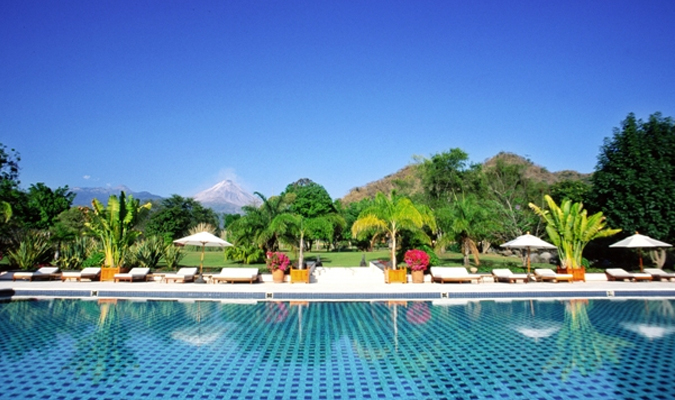
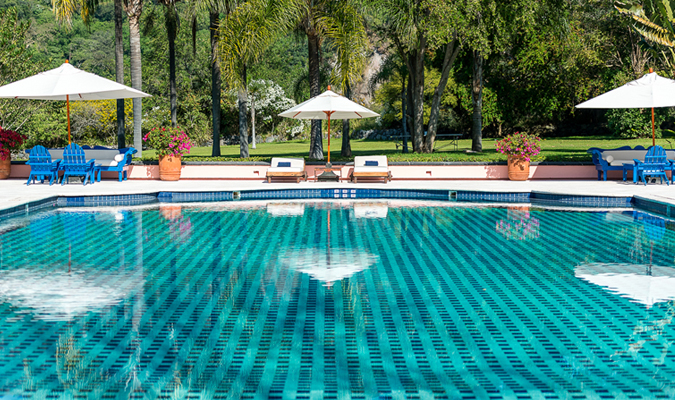
Once settled in, the Hacienda’s 2,500 hectares  are open to enjoy and explore! Our first stop? The 110ft checkered swimming pool, of course! Guests wander through the colorful, lush gardens that exuberate various shades of pinks and purples and follow the long jumping fountain and waterfalls to the far back of the Hacienda where the grand swimming pool presents itself. At a perfect temperature, the pool invites guests to relax for a few minutes before heading on to more discoveries. Within the Hacienda’s main building there is also a children’s area (located in an over-sized rabbit shrub); a terrace with breathtaking views of the Volcano de Fuego; The Yellow Bar, a social hub for evening cocktails; a wood-beamed library that offers wi-fi; and various club rooms perfect for hosting events or playing a game of billiards with mates.

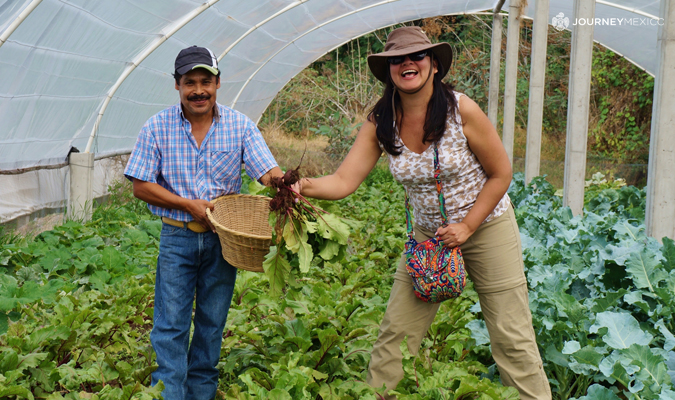
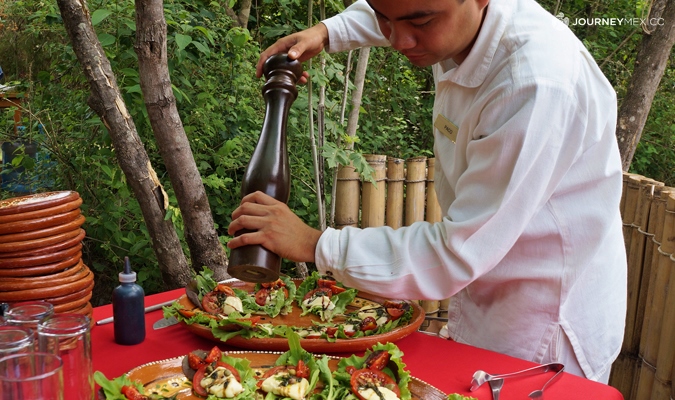
Outside of the Hacienda’s main building is where the “living experience” manifests. Most notably is Hortalizas where Maestro Salvador grows and tends to over 45 different vegetables and fruits — all organic. With all the produce they grow, combined with their own cattle and farm animals, the Hacienda is 80% sustainable using its own food. Maestro toured us through the gardens, allowing us to pick our own berries, smell the variety of seasonings, and eat some crisp kale straight from the bush. After harvest, guests can be treated to a snack using all the fresh ingredients!

hacienda-san-antonio-mexicojourney-8
hacienda-san-antonio-mexicojourney-7

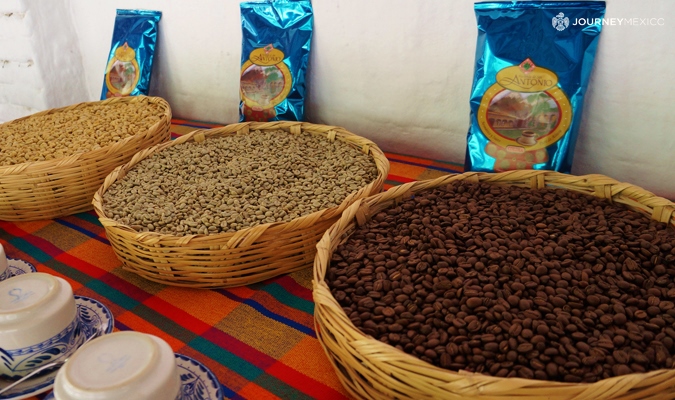
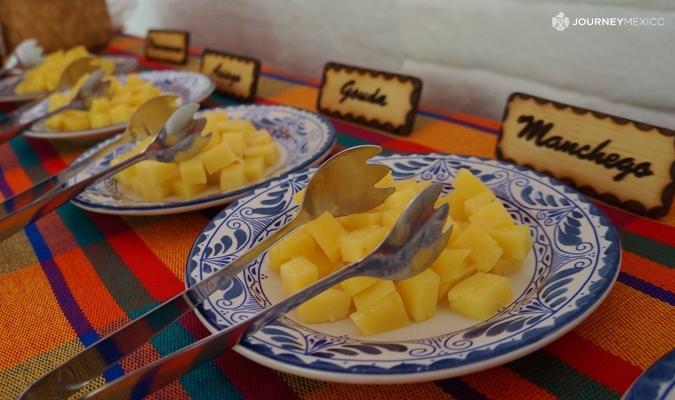
Another highlight of the property is a visit to their rancho, Rancho Jabalí, which includes a coffee plantation/production. This is where the Hacienda planted its roots back in the 19th century so it only proper that it continues the tradition today! Upon stepping out of a Suburban (Hacienda provides private transportation to each of their activities), the aroma of coffee beans fills the air pungently. Across from the forest of coffee plants is small building where the beans are peeled, roasted, ground, packaged, and so forth.  In addition to tasting the freshly brewed coffee, the Hacienda also offers a variety of 20 cheeses which are, of course, organically produced right on the farm along with some homemade grappa (Italian alcohol). Next door to the coffee guests can find their soap factory where they produce all their own soaps with the herbs and scents found in their gardens!

hacienda-san-antonio-mexicojourney-6 hacienda-san-antonio-mexicojourney-5

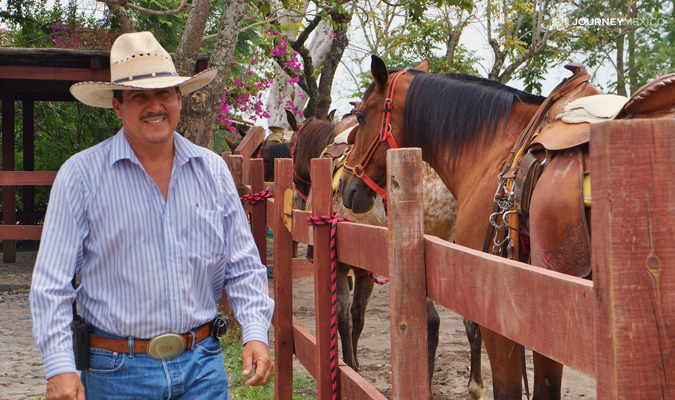
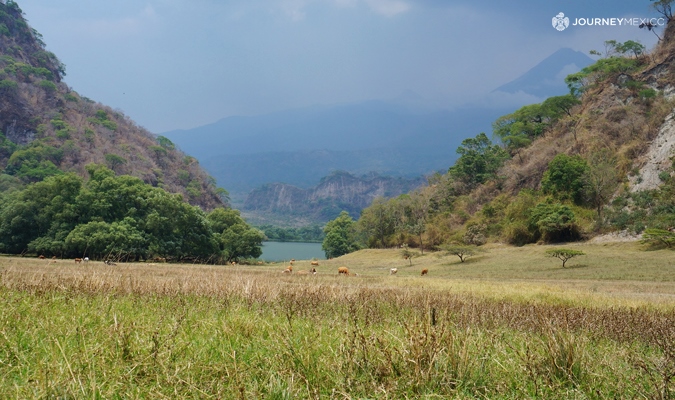
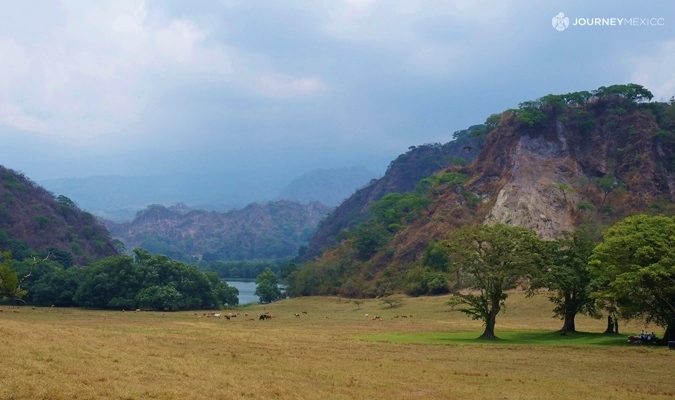
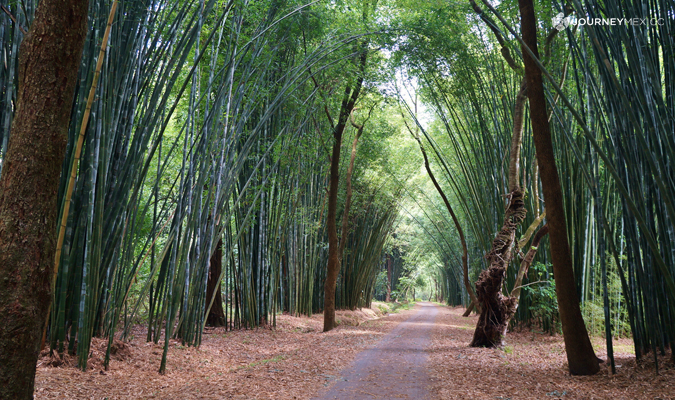
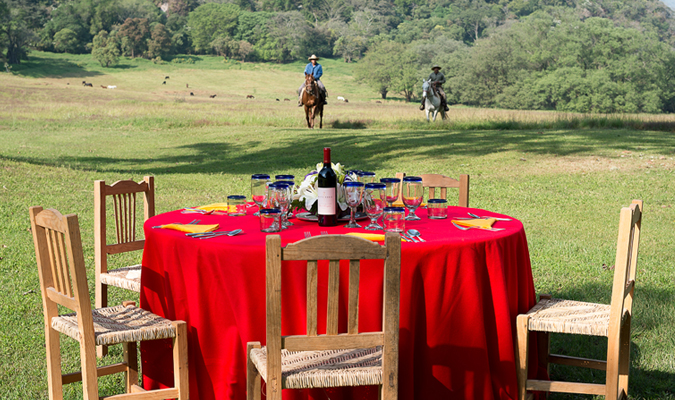
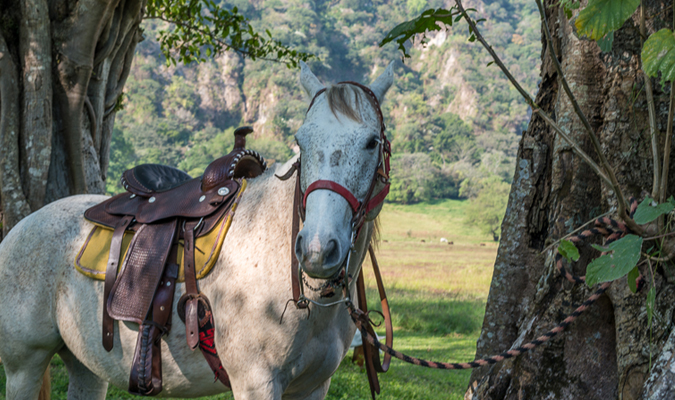
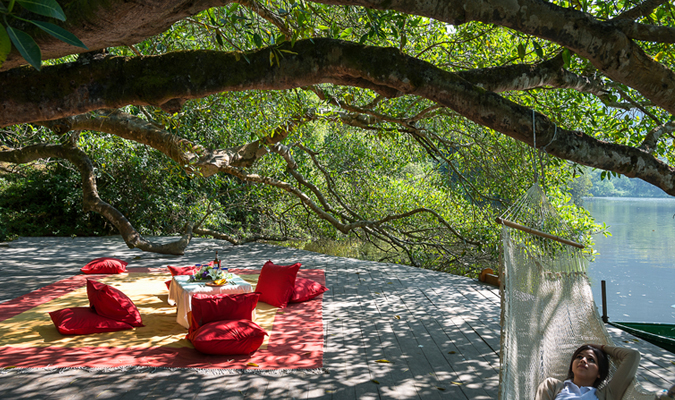
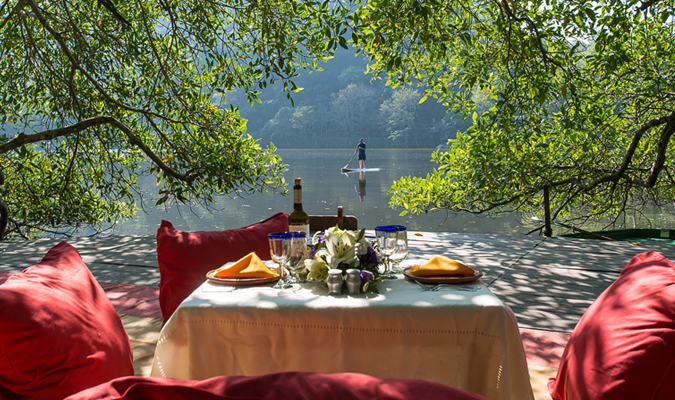
Driving through to view the Hacienda’s various lagoons, lakes, and waterfall by a Hacienda San Antonio guide, we leisurely made our way to the horse stables. The horses roam freely around their acreage and can be saddled up and set to ride by guests upon request. Best tip for the ultimate Hacienda San Antonio experience would be to giddy on up the horses and ride to el Epazote, a picturesque terrain bordered by a small lake, grazing cattle, a fantastic view of the volcano and a cluster of enormous trees providing just enough shade to have a perfect picnic among nature waiting for guests to enojy. After lunch, guests can ride the horses back to see the breathtakingly beautiful bamboo forest. It will have any traveler forgetting what continent they are on!
hacienda-san-antonio-mexicojourney-3
hacienda-san-antonio-mexicojourney-2
hacienda-san-antonio-mexicojourney-1

hacienda-san-antonio-mexicojourney-4

Hacienda San Antonio, although off the beaten path, is a standalone destination. Even though our #MexicoJourney allowed us to spend two days at the property, we did not even get to cover everything they have to offer. Volcano hikes, bird watching, mountain biking, nature walks, tennis and other recreational activities will be waiting for us upon our next return!  To read more stories while on the #MexicoJourney road, click here.

If interested in visiting Hacienda San Antonio, contact one of our travel planners at [email protected]. We have great itineraries combining the remote location of the Hacienda with its sister property, Cuixmala, located on the Pacific Coast.


Dolores Olmedo Museum in Mexico City Welcomes Frida and Diego

It’s been almost two years since Frida and Diego went away. During this travel, they have been to Germany, Canada, the United States and France. Finally, they are back to Mexico, to their home, the place that keeps the largest collection of artworks by Frida Kahlo and Diego Rivera: the Dolores Olmedo Museum.

As part of the events to celebrate the 20th anniversary of the Museum, that will be next September 17, the visitors will be able to rediscover the works by this couple of artists, thanks to the new look that our museography in the main rooms offer. “We are very glad to have Frida and Diego back in the Museum, after their successful trip around the world. We trust that the national and international visitors will have a renewed interest in getting close to the artworks and that they get as amazed and surprised as many other admirors of Mexican art from abroad have been”, says Carlos Phillips Olmedo, director of Dolores Olmedo Museum.

The new museography features the works of Diego Rivera and Frida Kahlo in a thematic-chronological way. The walls were painted in different colors, chosen after several tests, in order to enhance the plastic characteristics of the oils and watercolors we have. The selection of Prehispanic art pieces from our collection also changed. “Now we show them by cultures and we chose extraordinary pieces by their manufacture and by what they represent”, says Josefina García, director of Collections and Educational Services.
frida-kahlo

The artworks by Diego Rivera in our collection are exhibited as follows:

–        Influence of Europe: artworks from the Cubist period and inspired from the artistic movements, dating from 1907 to 1914, time on which Rivera lived in France and Spain. It includes the Self-portrait with broad brimmed hat; Young man with a fountain pen and the many cubists still life paintings and Spanish landscapes, which have a strong influence of Cézanne.
–        Mural artwork: collection of lithographs for the series of murals Rivera painted at the Secretary of Public Education; sketches for the murals he did at the University of Chapingo; sketches for the portable murals and the artwork Frozen Assets, which Rivera did for the MoMA in 1931. The visitors might be able to understand the creative process to create a mural, since the first drawing until the final artwork.
–        Nudes: The Afroamerican dancer Maudelle Bass was portraited by Diego Rivera in 3 paintings that are showed here. We also include the lithography Nude portrait of Frida and the sketch Nude with calla lilies, paintings that have been displayed rarely.
–        Portraits: The portrait of Dolores Olmedo dress as a Tehuana changes places for the first time. In this room, this painting is showed along with the portraits of the children of Dolores Olmedo, as well as some other characters, such as Pita Amor, José Pomar, Angelina Beloff and Alberto J. Pani.
–        Mexican life: Rivera was one of the most important characters from the Mexican School of Painting. We show some watercolor and oil paintings, which feature daily life scenes in Mexico.
–        Russia: After being diagnosed with cancer, Diego Rivera traveled to Russia, with the idea of finding the cure to his illness. There he saw children playing outside the hospital, and also painted them in works as Children with Sputnik. Snowy landscapes are displayed here as well.
–        Last years: Dolores Olmedo offered her house in Acapulco to Diego Rivera, so he could convalesce and rest from the illness. There, he painted a series of sunsets, from which he have 20. One of the last paintings Rivera did was Watermelons, a motif that matches the last painting that Frida Kahlo did (Viva la vida).
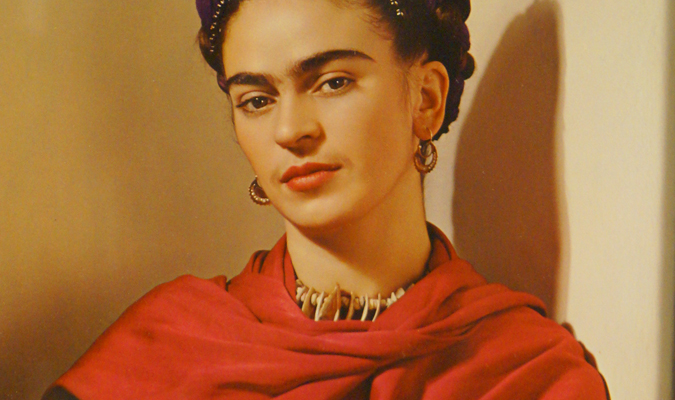
Regarding Frida Kahlo, her artworks are displayed in two rooms, one for the color and fiesta environment that she enjoyed, and the other with some of the hardest of her paintings, that talk about the psychology of the character.
–        Color: The room evokes the so called Blue House, with some folk art from our collection. It also presents some of the still life paintings she did.
–        Pain: The collection of Dolores Olmedo Museum has some of the most dramatic artworks of Frida Kahlo, which talk about her physical and emotional pains, such as Broken column and Henry Ford Hospital.

We also have an audioguide available, in English and in Spanish.


Museo Dolores Olmedo

Open:  Tuesday to Sunday de 10 a 18 hrs.
Entrance: National visitors: $10.00
Foreign visitors: $65.00
Children under 6 years old and Seniors: Free
Free every Tuesday.

www.museodoloresolmedo.org.mx
Facebook: museodoloresolmedo
Twitter: @DoloresOlmedo
Google+: museodoloresolmedo
YouTube: museodoloresolmedo

More information, images or interviews:
Patricia Cordero
Communications and Digital Contents Coordinator
Museo Dolores Olmedo
Office: + (52) 5555-0891 ext. 127
Mobile: +(521) 55-1451-5850
[email protected]

Dancing with the Viejitos of Michoacan – #MexicoJourney

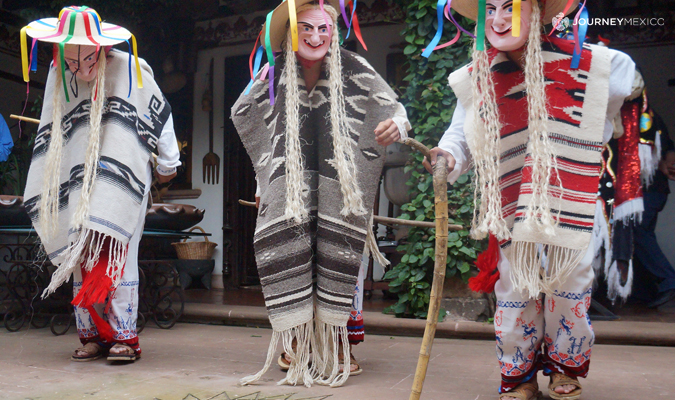
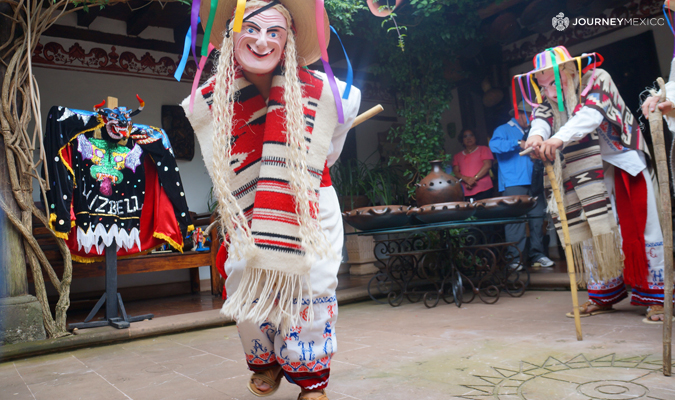
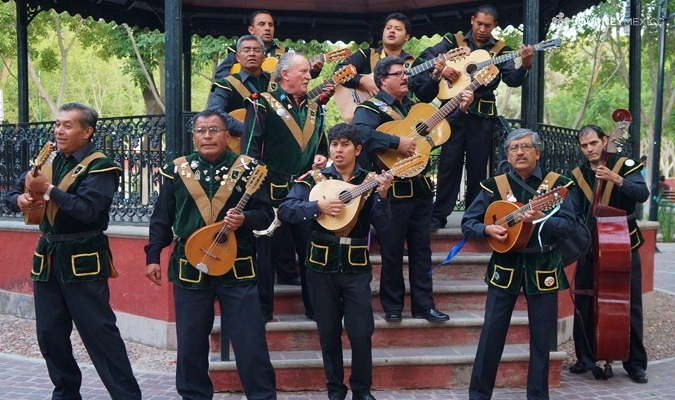
Across Mexico, celebrations and festivals are accompanied by music and dance that owes it variety to a fusion of traditions. Mexico has a vast range of regional folkloric dances performed only in their specific states or areas and one of those is called “La Danza de los Viejitos” (The Dance of the Little Old Men) which is traditional to the state of Michoacán.

The dancers, who are colorfully dressed as senior citizen men wearing bright hats adorned with ribbon, a pink smiling mask, and typical campesino clothing, is a intended to be a humorous dance. The men start hunched over, aching in pain as they walk with their canes in very slow motion when all of a sudden it turns into vigorous, agile dancing and stomping their feet. The viejitos are accompanied by violins and guitar melodies which are meant to interpret the folkloric characteristics and excite the crowd. There are moments in the dance when the viejitos return to their “elderly” state, coughing and falling over. This performance is said to trace back to pre-Hispanic times to the Purépecha indigenous group from Michoacán and was meant to honor the ‘Old God’; later, after the colonization by Spain, it was “modernized” and became a parody of old Spanish men.

michoacan-viejitos-3 michoacan-viejitos-2

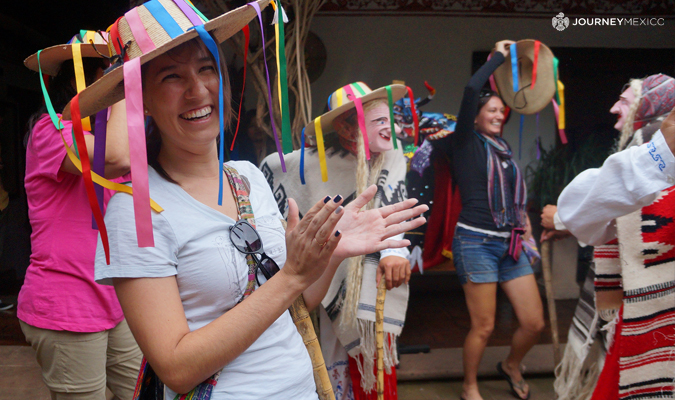
On our 6th day of the #MexicoJourney, we found ourselves in Patzcuaro, Michoacan at Casa de la Real Aduana surrounded by the energetic Danza de los Viejitos. The dancers filled the room with laughter and excitement as their playful interpretations progressed. Toward the end they pulled in people from the group to dance along. Their theatric expressions full of color and symbolism was a memorable and fun moment for everyone!
michoacan-viejitos-4

For the opportunity to plan a trip similar to the one we are on, check out our Mexico UNESCO World Heritage Cities Itinerary. To read more stories while on the #MexicoJourney road, click here.


Things to do in San Miguel de Allende – #MexicoJourney

A delightful colonial town paved with cobblestone, San Miguel de Allende in Guanajuato is full of interesting mansions, museums,and churches. Recently named “The Top City in the World” by Condé Nast Traveler, it has become one of Mexico’s most popular and attractive tourist destination. The town’s active cultural life includes traditional charm and modern familiarities and there are plenty of things to see and do in San Miguel Allende.
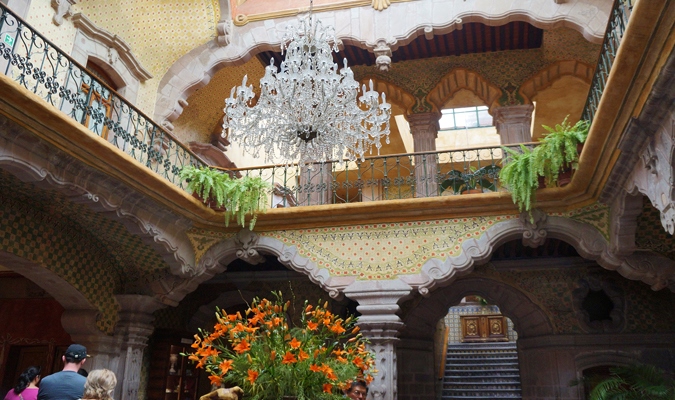
Along our #MexicoJourney, we spent two days here soaking in the laid-back vibe and savoring the delicious cuisine.  In addition to staying at the five star luxury property of Rosewood San Miguel Allende, we also enjoyed several other highlights and attractions. Below is a list of the top things to do in San Miguel de Allende. 
san-miguel-allende-1-centro-historico-

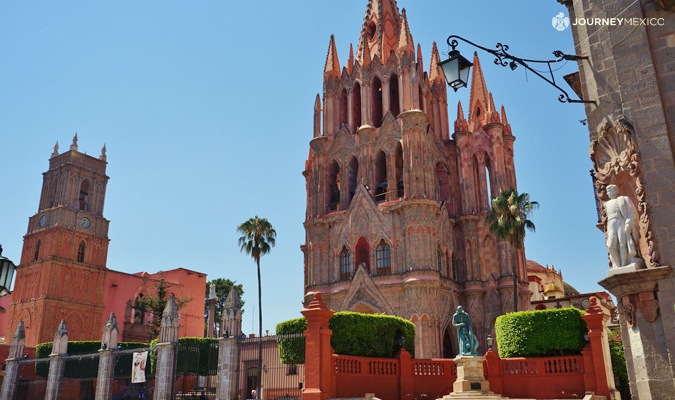
Visit La Parroquia de San Miguel Arcángel

Notable for its fantastic Neo-Gothic exterior this is the emblem for the town.


Enjoy a callejoneada Through the City

A callejoneada is a walking serenade and folkloric event unique to Guanajuato. In a group led by costumed performers the callejoneada strolls around the streets singing popular songs about local legends.

san-miguel-allende-1-callejoneada

Go for drinks at sunset at Rosewood’s Luna Rooftop Bar

Luna Rooftop Tapas Bar has one of the most spectacular views of San Miguel de Allende and offers authentically prepared international tapas, delicious margaritas, and signature  cocktails.


Visit the Artisans’ Market

The Mercado de Artesanias sells a wide variety of local handicrafts and other crafts from around Mexico. Is it located behind the city’s main fruit and vegetable market.

san-miguel-allende-1-artisans-market


Relax with a Signature Hotel Matilda Spa Treatment

Hotel Matilda offers an renowned Apothecary Concierge and takes the spa experience to a new level of personalization by completely immersing guests in the process of creating their very own beauty  product. Guests are involved every step, from deciding on the type of products and the ingredients to watching it being prepared by hand.


Have dinner at Casa Sierra Nevada

A beautiful collection of restored colonial casas, Casa Sierra Nevada is hotel/bar/restaurant that boasts an impressive array of awards and accolades and artfully prepared Mexican-contemporary dishes featuring only the freshest local ingredients.

san-miguel-allende-1-casa-sierra-nevada-view


For the opportunity to plan a trip similar to the one we are on, check out our Mexico UNESCO World Heritage Cities Itinerary.  A special thank you Rosewood San Miguel Allende for hosting us. To read more stories while on the #MexicoJourney road, click here.


A Quick Stop in Queretaro – #MexicoJourney

Between the road from Mexico City to San Miguel Allende is the  energetic colonial town of Querétaro. It is the perfect place to stop for lunch along the way and that is exactly what we did on Day 2 of our #MexicoJourney!

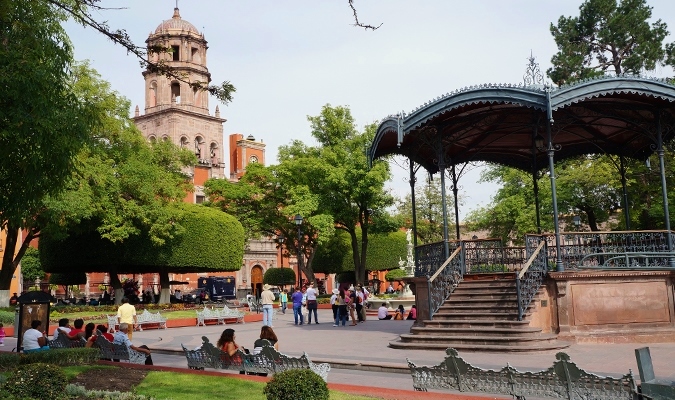
Querétaro (which is the capital of the state of the same name) was settled over 450 years ago during the 17th and 18th century and what came of it was a fusion of indigenous ideas and Spanish colonial influences. With its numerous grand constructions and perfected plazas, Querétaro’s Centro Histórico (Historic Center) is an open museum where the vivid streets serve as art galleries and the Baroque buildings as exhibitions, all guarding a piece of rich history related to Mexico’s independence from the Spanish..

Upon arriving to Querétaro, we stopped for a fantastic lunch at one of the city’s most impressive boutique hotels, Casa de la Marquesa, before continuing on for a small  one hour tour. Winding up and down the streets full of parks, plazas, courtyards, mansions, and former monasteries one can’t help but notice how immaculately clean and well labeled the city is.

Casa de la Marquesa Boutique Hotel queretaro-1

After a few explanations by our private, English-speaking guide who we jokingly called “The Encyclopedia” due to his broad, in-depth knowledge of the city, we headed back on our #MexicoJourney toward San Miguel de Allende. While one could easily spend two or three days getting to know Querétaro’, it was great to see a quick glimpse of another side of Mexico. For the opportunity to plan a trip similar to the one we are on, check out our Mexico UNESCO World Heritage Cities Itinerary.

To read more stories while on the #MexicoJourney road, click here


queretaro-4

Chalchiuhtlicue, The Aztec Goddess of Water – #MexicoJourney

Mexico City’s Museo Nacional de Antropología (National Museum of Antropology) is one of the city’s most important and most visited museums which naturally made it a stop on our #MexicoJourney itinerary today. The museum contains one of the world’s largest collections of archaeological and anthropological artifacts — over 10,000 pieces — from pre-Hispanic times including Teotihuacan, Toltec, Aztec, Mixtec, Zapotec, and Maya.

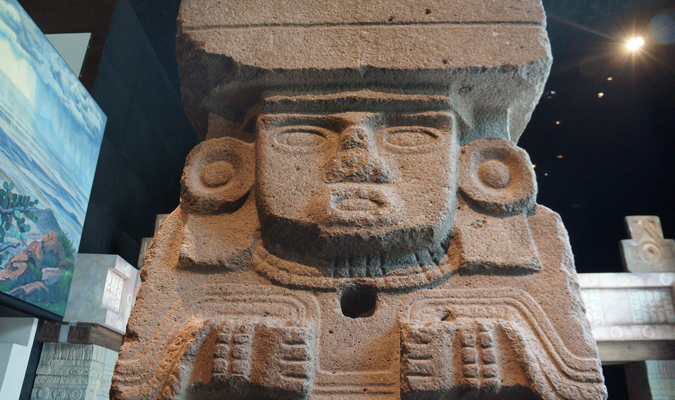
Spanning a large portion within Chalpultepec Park, each room displays different Mesoamerican cultures comprehensively and lends insight to a deep, complex history. The Piedra del Sol (Stone of the Sun)- often incorrectly identified and referred to as the “Aztec Calendar” – is one of the museum’s greatest highlights. However there was one piece in the museum that really stood out to me above the rest: a monolithic sculpture of Chalchiuhtlicue, the Aztec Goddess of Water. It might have been the impossible-to-pronounce name, but something drew me to her presence.

Her name, pronounced chall-wee-tl’E-kO  means “She of the Jade Skirt”. She was a mighty goddess of all waters on earth, but especially horizontal, running waters (lakes, lagoons, steams, etc) and the consort to the Tláloc (god of rain, fertility, and water).She was adored with a headdress, collars, bracelets and wore a quechquemit (shawl-like garment), skirt and sandals. In addition to waters, she was associated with agriculture and fertility.

It is quite interesting to know as well that in the Archaeological Site of Teotihuacan, The Pyramid of the Sun is associated with Tláloc  and the Pyramid of the Moon (second largest pyramid in Teotihuacan) is  with Chalchiuhtlicue. Tomorrow we are visiting Teotihuacan and I look forward to learning more about her!


aztec-goddess-water-


#MexicoJourney Through Colonial Mexico and the Pacific Coast

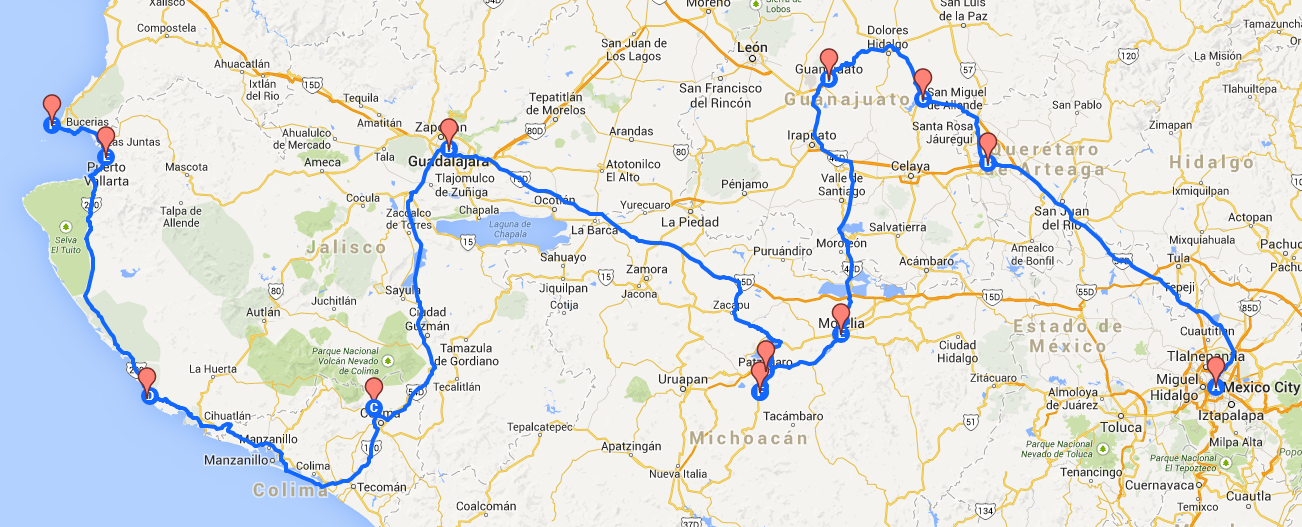
This weekend, Journey Mexico will welcome 11 of the most seasoned tour operators and travel agents from the UK, USA, Brazil, Canada and Netherlands on an exclusive visit to Colonial Mexico and the Pacific Coast. Accompanied by our General Manager, Matteo Luthi, three of our staff members (Lindsay, Paola, and Jessica), and some of Mexico’s finest local guides,  the group will embark on a 14 day #MexicoJourney to explore the vibrant capital of Mexico City; the exquisite architecture and multi-layered history of Mexico’s highland colonial pueblos; and the remote fishing villages and hidden boutique luxury resorts along Costa Careyes/Punta Mita.

Joining the trip as  Jessica will be posting photos and real-time updates as we discover and scout Mexico.

You  can follow our journey on InstagramTwitterFacebook and FourSquare with the hashtag #MexicoJourney.

If you have any questions, or requests (perhaps you want to see Paola eating authentic dishes from Michocan, or Lindsay jumping at the pyramids of Teotihuacan!), be sure to send them along to Jessica and include the hashtag!

mexico-journey-1

Over the 14 day trip Jessica will be interacting live from: Mexico City, Queretaro, San Miguel de Allende, Guanajuato, Morelia, Patzcuaro, Santa Clara del Cobre, Guadalajara, Colima, Costa Careyes, Costa Alegre, Puerto Vallarta, and Punta de Mita!


FAM Map

Mexico Investing in Tourism; Recognized as Economic Activity with Greatest Potential

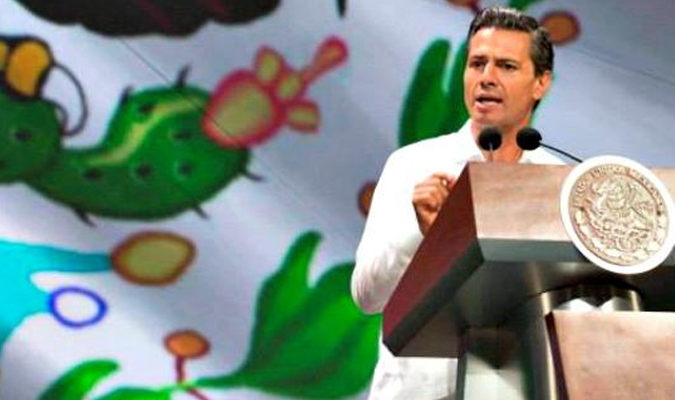
Mexico plans to invest 180 billion pesos ($13.8 billion USD) in tourism infrastructure, President Enrique Peña Nieto announced during the Tianguis Turístico Cancún 2014. This would be done through Nieto’s tenure until 2018 through the National Infrastructure Program.

“Mexico has everything necessary to become a tourism power at the global level,” the president told industry leaders gathered at the 39th Tourism Fair in the Caribbean resort city of Cancun.  The plan is to use the money to improve infrastructure to boost the competitiveness of Mexico as an attractive tourist destination through upgrades to airports, roads, and cruise ship terminals (more info at: What to Expect in Mexico in 2014).

The government plans to follow a precise three-pronged strategy and extend it over 25+ major tourist destinations. Of the first objective is to add renovations to Mexico’s beach destinations, colonial towns, and extend the Pueblos Magicos (Magic Towns) program.  Next, new offerings are to be developed at Meso-American heritage and archaeological sites as well areas of sustainability at some of Mexico’s most visited sites like Chichen Itza, Palenque, Calakmul, and Teotihuacan.  Finally, the third element in the strategy is to modernize and refurbish several of Mexico’s ports and airports including Mexico City, Cancun, Guadalajara, Los Cabos, Monterrey, Puerto Vallarta and Mazatlan. 

Tourism is recognized as a crucial economic activity and engine for development in Mexico; it is one of the nation’s biggest source of revenue and directly employs some 2.5 million people. Javier Guillermo Molina, Chief of International Affairs and Cooperation of the Mexican Ministry of Tourism quoted,  “Because of the importance of the sector, the President recently announced the National Tourism Policy, recognizing tourism as one of the economic activities with the greatest potential for growth and the capacity to generate employment and foster development”

This year, Mexico has welcomed 3.7 million foreign tourists in the first quarter, a figure that is up 10.1 percent from the same period in 2013, the Tourism Secretariat said. 

 pena-nieto-photo-tianguis

Sources:
Mexico plans to invest nearly $14 bn in tourism industry, president says / EME
Mexico welcomes 3.7 mn foreign visitors in 1st qtr. / EME
UNWTO calls for increased support for tourism in the development agenda / UNWTO
Mexico wants to focus on tourism / Blouin News

72 Hours in the Roma – Mexico City

by  Lydia Carey

Why go anywhere when you’re right where you want to be? Mexico City’s Roma neighborhood, where hipsters, grannies and fresas all mix and mingle among impressive architecture and incredible restaurants, is not only the place to be these days, but where you’ll want to be if you just have just a little time to take in a part of the city. Here’s a few things you might want to do during your 72 Hours in the Roma.

 Friday:
12pm

If you arrive at your hotel exhausted, but are anxious about only having a weekend, I have one piece of advice: slow down. Even though you’ve landed in the country’s pulsing metropolitan core, people still eat lunch here for at least 2 hours and sneak away for a siesta or a mid-afternoon ice cream trip if they can. So go ahead and take that nap or drink that beer on the hotel patio … the city will wait as you ease in.

3:30pm

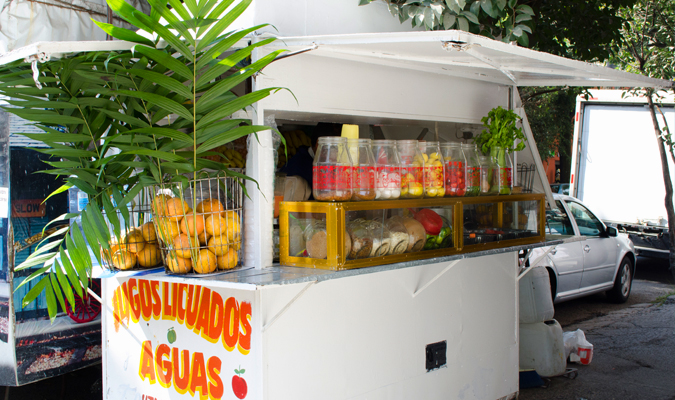
As you drift out of sleep to the sounds of school kids in the street, it’s  probably just the right time and light to take a stroll through the Rio de Janeiro park. Get yourself an ice cream or a cup of fruit doused in chile and lime and admire the architecture – some of the city’s most interesting art deco and art nouveau buildings are on each corner of this square.

5:30pm

Head south from the park to start your night off with people watching in one of Roma’s outdoor cafes; Lucille’s on Orizaba Street, Nonsolo on Álvaro Obregón or La Nacional on the corner of Querétaro and Orizaba.

9:00pm

Take it easy on your first night in town and don’t head straight for the hot sauce and tacos. If you want to go high-end, one of the Roma’s newest hotspots, Máximo Bistro, on the corner of Zacatecas and Tonalá. A little more relaxed is Jamón J Jamón, an incredible Spanish restaurant at Álvaro Obregón 128 and even more relaxed is the Argentine Pizza Franca on Mérida 109. Make sure you linger over your last glass of wine or final dessert; you’re in the one of the greatest cities in the world… take the time to enjoy it.
lydia_carey_roma_licuardos

Saturday:
11am

Saturdays in the Roma are for eating, shopping and the MODO – Roma’s very own mini-museum. The restaurant Breakfast on Durango Street is a mix of Mexican and American delicacies with outdoor tables on a quiet residential street. Delirio is nice for a more European feel and Sobrinos lets you enjoy the hustle and bustle of Mexican family brunch.

3:00pm

The MODO, on the corner of Colima and Córdoba, is a great little museum with rotating exhibits, often featuring the neighborhood and its history. You’ll find the best selection of boutique shops and galleries in Roma Norte and Álvaro Obregón has lots of little places to stop and browse, including a handful of dusty bookstores that smell liked you’ve slipped between the pages of an ancient tome. The toymakers at Taller Tlamaxcalli make beautiful wooden Ferris wheels and fighting boxers and Chinata is filled with all things olive oil. These last two are both on Chihuahua Street, a block south of Álvaro Obregón.

8:00pm

By the time the sun starts to weaken, your thirst will need quenching. It’s time for a Mexican craft beer at El Depósito on Álvaro Obregón or a mezcal at La Botica. If you want a sit-down dinner two nights in a row, the newly refurbished Antolia just opened up across from Máximo on Zacatecas Street, they have a revolving menu and a great selection of Mexican wines from Baja California. If you are up for a flavor explosion at a fraction of the price (and no alcohol in sight), check out Los Parados, the taco stand tradition (on the corner of Monterrey and Baja California Streets) where you literally stand around eating and watching the grease fly over their open-flame grill.

11:00pm

Dance off the tacos at Rincón de Cuba (Insurgentes Sur 300) or Mama Rumba (Querétaro 230) or head to Capone’s on Álvaro Obregón for some after-taco Spanish wine or cocktails.
lydia_carey_roma

Sunday
12pm

Traditionally Sunday mornings are for barbacoa and pulque – the nectar of the gods. Both are hangover cures and Mexican comfort food. The Hidalguense on Campeche Street sells “cured” pulques – a fermented alcoholic drink made from the agua miel of agave cacti. Cured simply means flavored with fruit juices – raspberry, prickly pear or guava.

 1:30pm

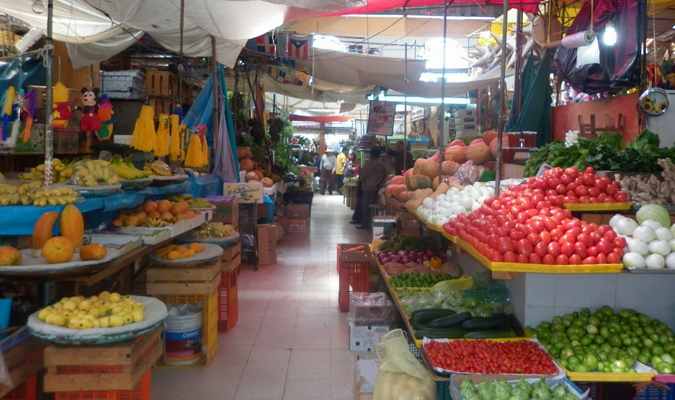
Whether you love traditional Mexican markets or have never been to one, the Medellín, a block down on Campeche Street, is lively but not overwhelming, especially on Sundays. Stop by Las Delicias for an after-brunch juice, peruse the rows of spicy salsas or take pictures of  giant pieces of chicharrón for sale in the meat section.

3:00pm

Usually by three pm Cine Tonalá (Tonalá 261) has an art film showing or if you want you can just sit in their outdoor/indoor patio, sip a beer and take in the hipster scene. Next door is a quirky antique bookstore that also sells Mexican opera vinyls, old postcards and other odd knick knacks. Afterwards head to the Luis Cabrera Park to watch the kids ride their bikes and the dogs play in the fountain.

8:00pm

Sunday dinner is a casual affair after all that brunching, plan for a snack at Traspatio, a backyard bar in Roma Norte, or something light at Cabrera 7 right in front of the Luis Cabrera Park, where you can watch the neighbors out for their Sunday walk.

lydia_carey_roma_medellin

Monday
9am

Monday morning it’s back to the airport but before you go, grab a chocolate croissant and coffee at the Fournier Rousseau Bakery (Córdoda 108) and take one last stroll down Álvaro Obregón, watching as people head off to work through the Roma’s colorful streets.


Bio: Lydia Carey is a freelance writer madly in love with Mexico City. You can check out more of her work at her blog www.mexicocitystreets.com or follow her on twitter @MexCityStreets.
Banner photo by ProtoplasmaKid


Mexico’s 8 Most Spectacular Swimming Pools

Inspired by the Condé Nast Traveler post “Beautiful Hotel Pools: Imagine Yourself Here” and an incredible photo we saw on our Facebook feed from Las Ventanas, we decided to round up the most stunning and unique pools in Mexico. A hotel’s pool can often be the biggest deciding factor when flipping through photo galleries; it conjures up feelings of wanderlust, escapism, and luxury and sells the “I want to be right there, right now” idea when planning a vacation. With that said, we hope these photos inspire you to take your next trip to Mexico!


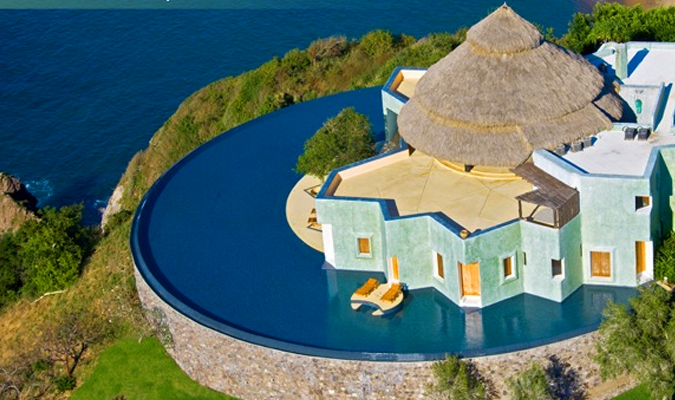
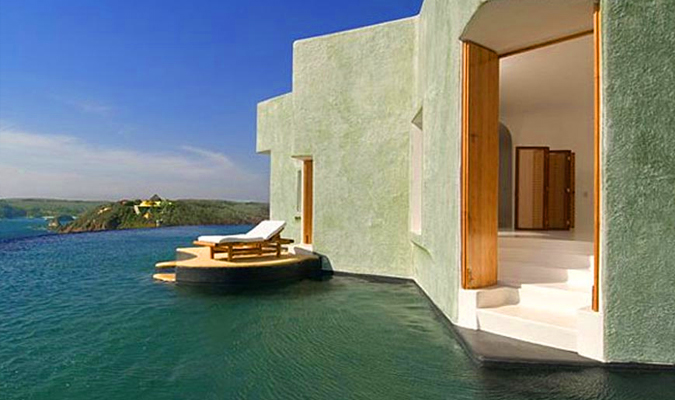
Casa Sol de Occidente – Costa CareyesPrivate Villa in Costa Careyes Private Villa in Costa Careyes


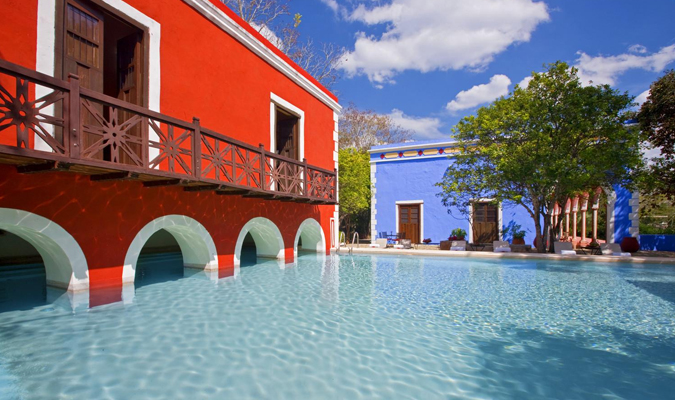
Hacienda Santa Rosa – Yucatan Peninsula

Click for More >>

Hacienda Santa Rosa in the Yucatan Peninsula


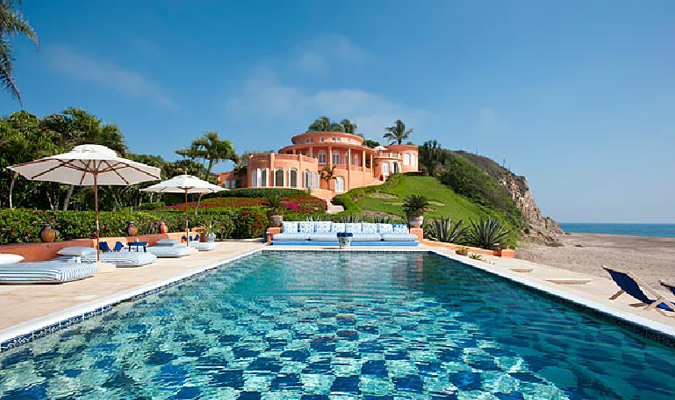
Cuixmala – Coasta Careyes

Click for More >>

Cuixmala private villa on Pacific Coast


Hotelito Desconocido – Costa Careyes

Click for More >>

hotelito-desconocido-p

One and Only Palmilla – Los Cabos

Click for More >>

One and  Only Palmilla Cabo pool


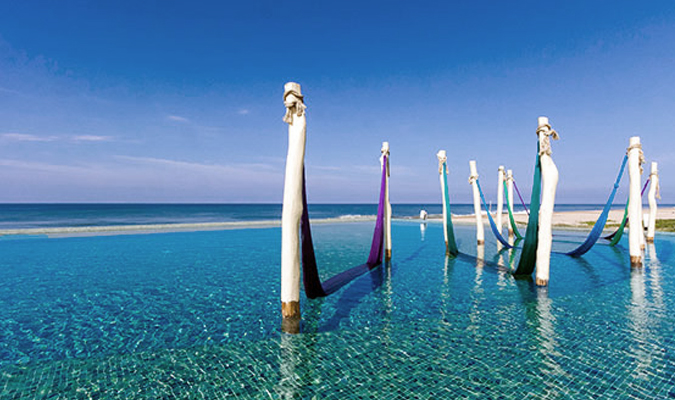
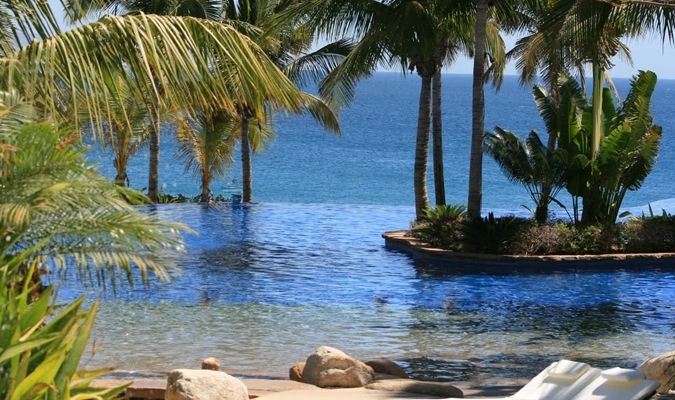
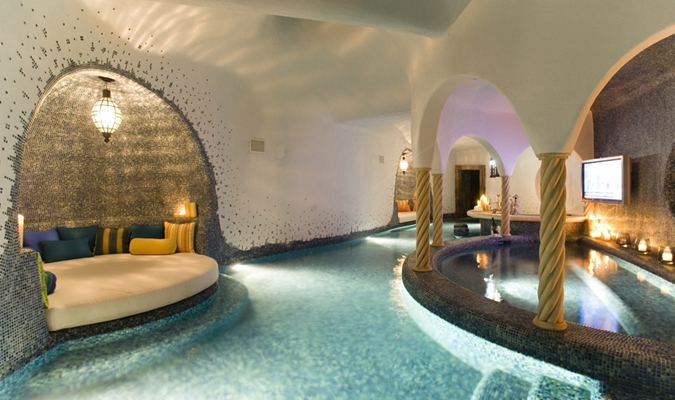
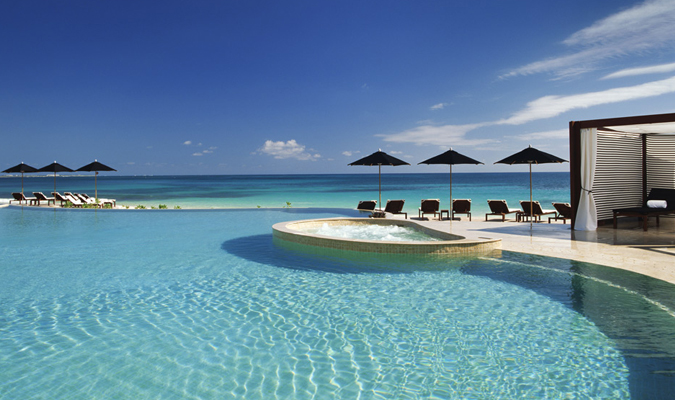
Hacienda San Antonio – Colima, Comala

Click for More >>

Comala Colima hotel luxury


Private Beachfront Escape – Los Cabos
Private Mexico Beachfront Estate


Rosewood Mayakoba – Riviera Maya

Click for More >>

Rosewood Mayakoba

Mexico on The World’s 50 Best Restaurant List 2014

Always an anticipated event for culinary geniuses and serious foodies is the  “The World’s 50  Best Restaurant List”.  The World’s 50 Best Restaurants is a list sponsored by S. Pellegrino and Acqua Panna  and is based on a poll of 800+ international chefsrestaurateursgourmands and restaurant critics.  Each member of the jury votes for five restaurants — three from their respective region and two from another. This year, the winners were announced from London and shared that Mexico made the list with Pujol!

Pujol Restaurant in Mexico City is considered one of the top 20 Best Restaurants in the World!

Since the awards started in 2002, Mexico has made the list consecutively since 2006. Here is a small timeline:
2006: For the first time, a Mexican restaurant entered the top 100. It was Tezka Zona Rosa  (under direction of Chef Mikel Alonso and Bruno Oteiza) coming it at number 76.
2007:  Tezka didn’t make the cut and was removed from the list.
2008: In only its first year of operation, Biko Restaurant in Mexico City  (under direction of Chef Mikel Alonso and Bruno Oteiza) made its debut on the list coming in at number 89.
2009: Biko moved up to 81.
2010: For the first time in history, a Mexican restuarant made the top 50; Biko reached the 46th spot. Also, Pujol (under direction of Chef Enrique Olvera) was added to the top 100 coming in at 72.
2011: Both of the restaurants jumped in position and ranked in the top 50; Biko at 31 and Pujol at 49.
2012: Pujol ran with its momentum and landed a spot at 36 on the list while Biko came in at 38.
2013: Pujol races for number one and comes in at the 17th spot on the list while Biko was able to regain its former position at 31.
2014: Pujol just made the cut for top 20, while Biko dropped to 59.

What the list has to say about Pujol:

“When chef Enrique Olvera opened Pujol almost 14 years ago, the budget was so small that his wife had to paint the walls. Things have changed at what is now widely considered Mexico’s best restaurant, with its platoon of 27 cooks. One of the leading exponents of new Mexican gastronomy, it is deeply immersed in the republic’s cultural legacy. Some dishes utilise time-honoured native seasonings, and dried insects also feature heavily.”
See more details and his standout dish here.
enrique-olvera

Pujol is located at Francisco Petrarca 254, Miguel Hidalgo, Chapultepec Morales, 11570 Ciudad de Mexico, D.F., Mexico

What the list has to say about Biko:

“Biko’s menu is a stimulating collision of Spanish and Mexican, described by chefs Bruno Oteiza and Mikel Alonso as ‘sumptuous with surprises’. Local produce is coaxed for maximum flavour in two contrasting menus: one traditional, referencing Basque cooking from their native San Sebastián; the other using forward-thinking techniques, giving the duo the freedom “to have all the fun we want”.”
See more details and his standout dish here.

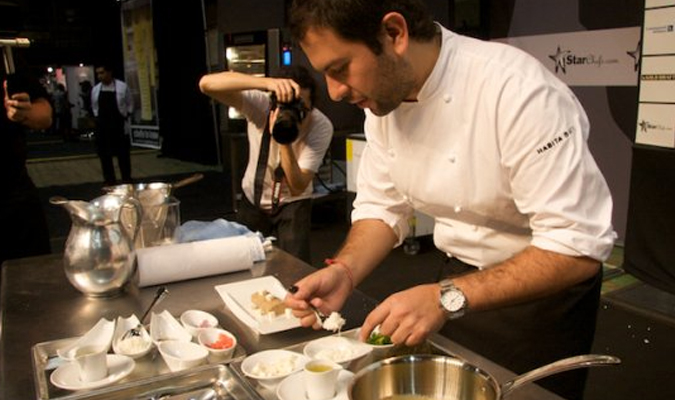
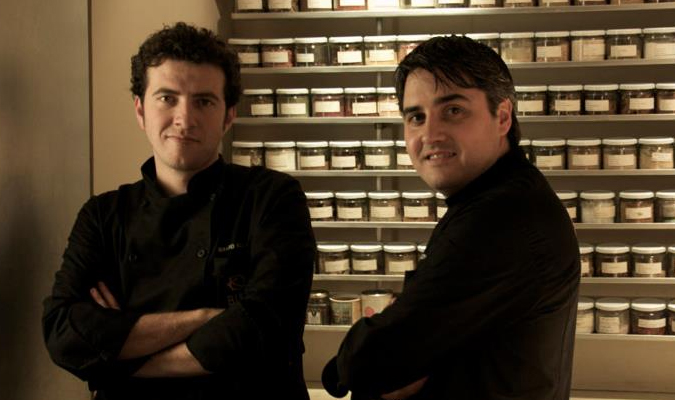
Chef Gerard Bellver y Chef Mikel Alonso.

Biko is located at Presidente Masaryk 407, Miguel Hidalgo, Polanco, 11550 Mexico City, D.F., Mexico


What do you think about the culinary scene in Mexico?  The Wall Street Journal thinks it deserves some recognition (Is Mexico City the Greatest Food City?) and we completely agree. For the opportunity to visit Mexico City and sample both restaurants, take a look at our Mexico City Private Tour.

Unique and Exciting Things to do in Cancun and the Riviera Maya – Day Tours

Our Cancun-based team is continually seeking out the most spectacular, creative, and memorable ways for guests to spend their holidays in the Yucatan Peninsula and we are excited to share that we have now added a variety of new tours in Cancun, Riviera Maya, and the Yucatan to our website.

The Cancun/Riviera Maya excursions that Journey Mexico offer aren’t your standard cookie cutter ‘pile-in-a-shared-van and get dropped off at x location’ type. We recognize that people have specifically chosen Mexico as their destination of choice to spend their leisure time and therefore believe minimal time should be spent on transportation and waiting around and more time on getting to know the wonderful history and culture of Mexico. From discovering the ancient ruins of the Maya and exploring the underground rivers and pools of the Yucatan to cruising the crystal blue coast of the Riviera Maya and hunting local crafts in the colorful markets of Playa del Carmen, Journey Mexico’s expert guides will show travelers a different side of Mexico.

Here are our top 5 most unique and exciting tours in the Cancun, Riviera Maya, and Yucatan Peninsula.

1) Kohunlich & Bacalar Lagoon Air Expedition

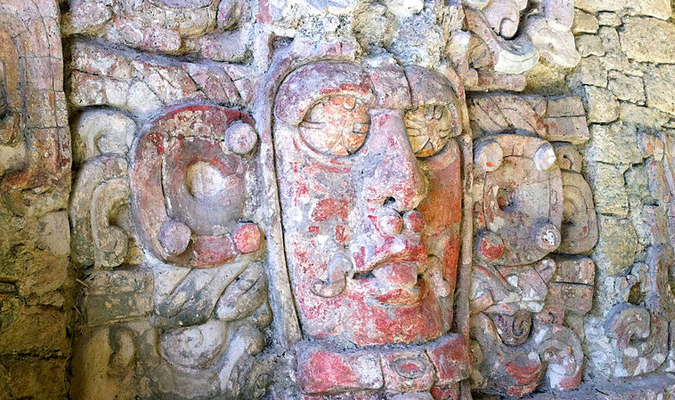
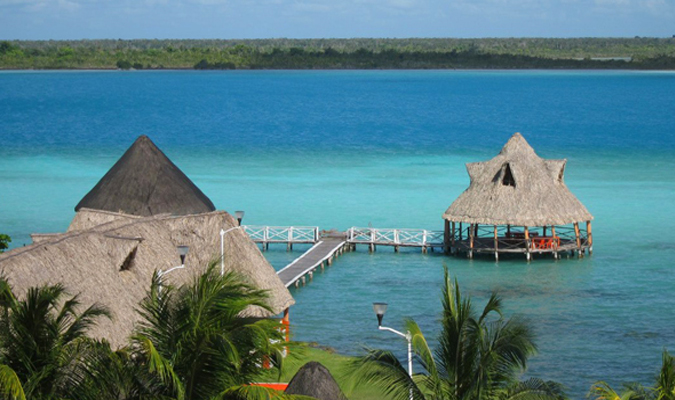
On this expedition travelers enjoy a spectacular privately-guided visit to the lesser-known archaeological site of Kohunlich. The site covers about 21 acres and is best known for the Temple of the Masks, an Early Classic pyramid whose main stairway is bordered by large, human-like stucco masks. The tour also includes a stop at Laguna Bacalar, known as the lagoon of the seven colors due to the varying shades of blue and turquoise  that changes at sunrise or sunset. In Bacalar , visitor can swim in the freshwater lakes or  take part of a private kayaking tour.

Kohunlich Archeological Site Bacalar Lagoon of Seven Colors

2) Private Deluxe Tulum & Akumal

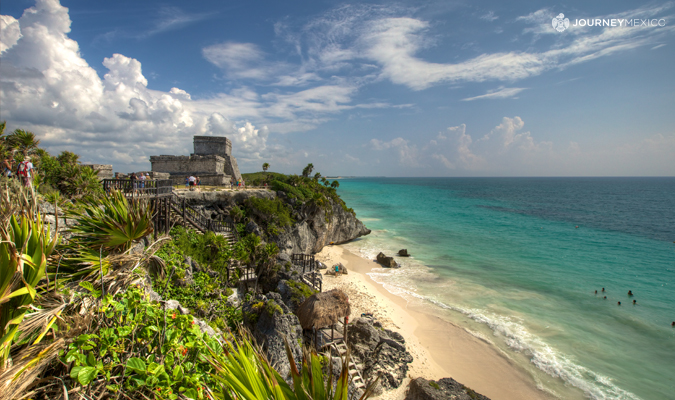
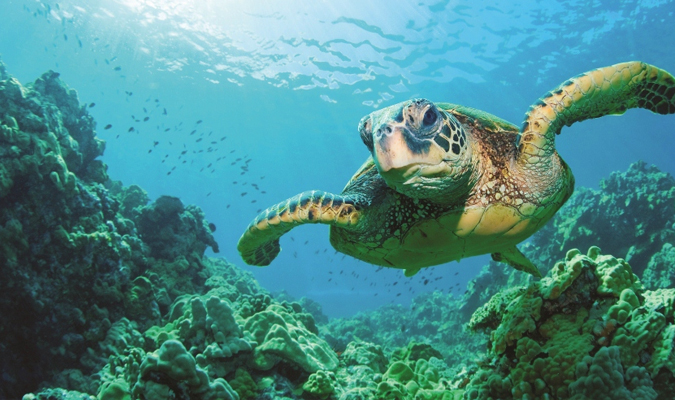
Unlike other Tulum tours you can find in the region, our Private Deluxe Tulum & Akumal allows flexibility for maximum enjoyment. Guests will be privately chauffeured to the ruins in the early morning in order to avoid peak visitation hours and temperatures.  A tour guide will accompany the visit and chat about the history and mystery of the Tulum Archaeological Site . Since the tour is private, travelers may choose to extend their visit by taking a refreshing swim in the turquoise sea or enjoy a longer lunch. After Tulum, the excursion heads to Akumal for a close encounter with the graceful and endangered sea turtles just off the coast via snorkeling. This tour is great for those who have limited time in the area and would like to maximize every minute spent.

Famous ruins at Tulum archaeological site akumal-turtle


3) Private Catamaran Charter to Isla Mujeres and Underwater Museum Tour

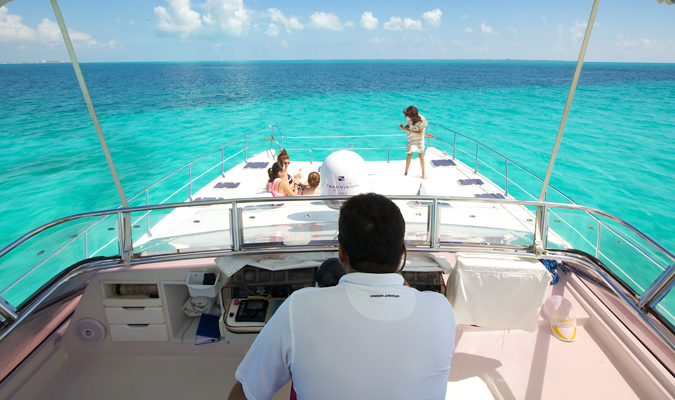
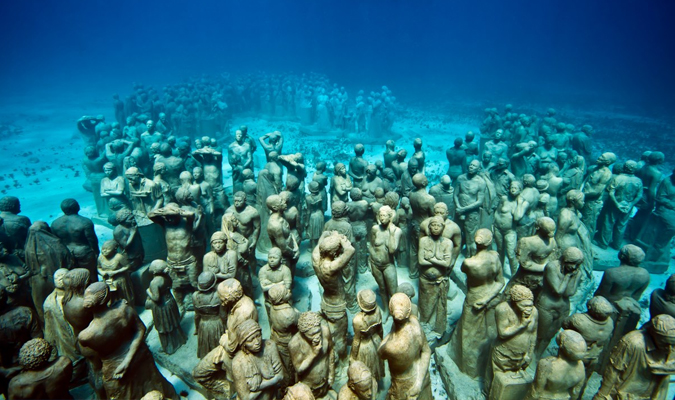
How does sailing the turquoise protected waters between Isla Mujeres and Cancun on a 45ft private catamaran charter sound? Travelers enjoy a private round-trip transportation between their hotel and marina and enjoy a 3 cabin/3bath luxury charter into the  Caribbean Sea. The private catamaran and its captain and crew are reserved for 6 hours and while on board, the staff is trained to pamper throughout the day, offering drinks and snacks.  The tour includes snorkeling, visiting secluded coves around the island, and even the possibility to do an expedition to the  Cancun Underwater Museum – the largest underwater museum in the world featuring more that 400 sculptures.

Private yacht in Riviera Maya and Cancun to Isla Mujeres Photo from Cancun.Underwater.Museum/ Facebook

4) Campeche and Calakmul Air Expedition

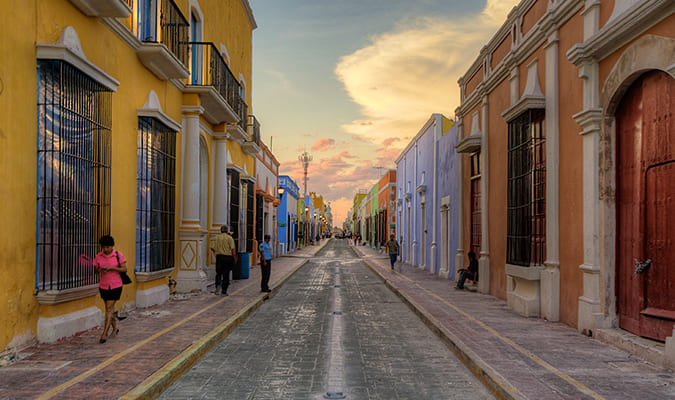
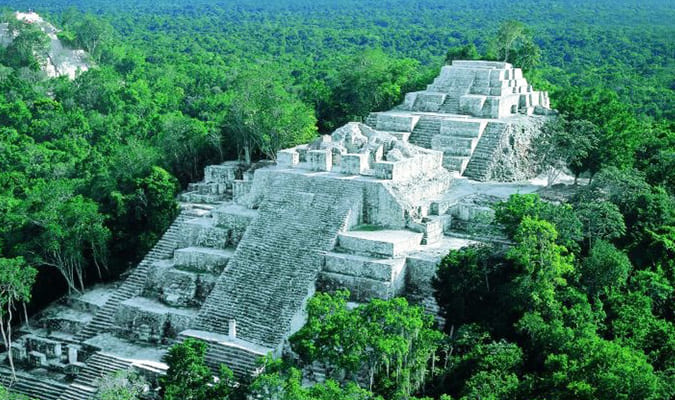
This tour is suggested for well-traveled visitors who have already visited  Cancun and the Riviera Maya’s main attractions and are in search of a new opportunity to explore deeper into Mexico. Guests are whisked off on a private jet and fly to the colorful colonial city of Campeche. The flight is only about an hour and offers aboard an array of fresh fruits, pastries and juices.  Arriving to Campeche, there is a stark change of scenery as its picture-perfect colonial town of Baroque Spanish architecture, narrow cobblestone streets, colorfully restored buildings, and majestic mansions lures visitors. After a guided visit, the jet is traded in for a private helicopter to experience an incredible view of the lush jungle and touch down for a tour of Calakmul Archaeological Site – the largest Mayan City build in  Mexico. Before heading back to Cancun, the tour includes a stop down in Campeche once again for some leisure time and a traditional Yucatecan lunch at Hacienda Puerta Campeche.

Campeche Street City Tour Calakmul ruins in Campeche


A Virtual Tour of Hotelito Desconocido

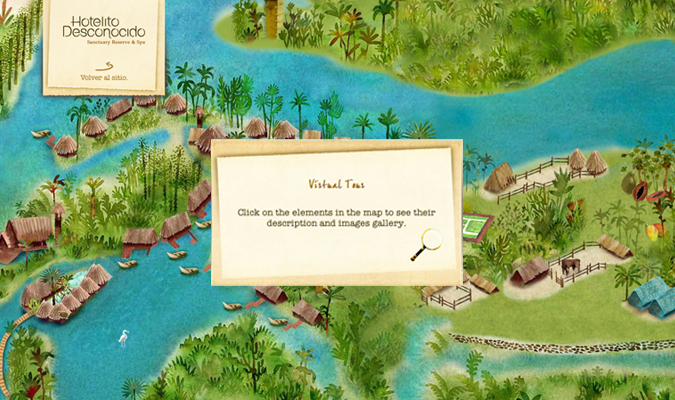
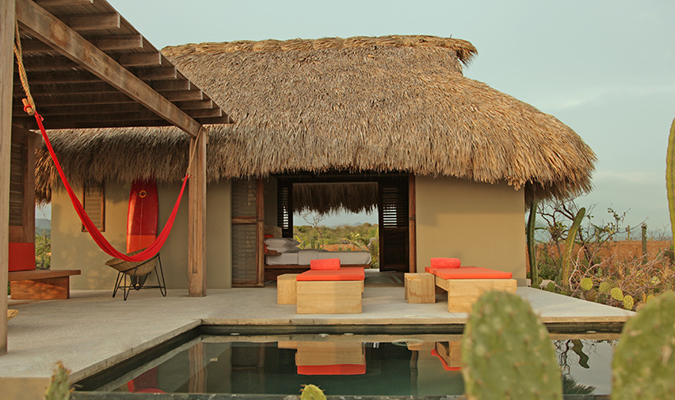
Just south of Puerto Vallarta along the Costalegre coast in Jalisco is the paradise of Hotelito Desconocido Sanctuary Reserve & Spa. Nestled between the Pacific Ocean and the Sierra Madre Occidental Moutains, Hotelito Desconocido is built  in a the natural protected zone of  El Ermitaño Lagoon and is completely ecologically friendly. The name, which translates in English to  “Little Unknown Hotel” is actually not a traditional hotel  nor little; it is made up of 27 individual ‘palafitos‘ (palapa-style stilt houses) that stand alone in the lagoon and spans 37 miles (60km) of sandy beaches. The property is unique and spread out in the winding clear waters, lush green gardens and tropical palm and fruit trees which more than 150 different kinds of birds call home! Each palafito has its own personality and name, chosen from the colorful cards of the Mexican Lottery. Words can’t quite do this place justice so it’s best to just take a look around yourself. Check out the virtual tour here:

virtual-tour-desconocido

In May, I will be visiting the Hotelito Desconocido for a site inspection and overnight stay. After a look around virtually, I am most excited to see the room “El Gallo”  for its deep, dramatic colors offset by bright natural light entering from all around.

Best New Hotels in Mexico 2014

If you’re looking to always stay ahead of the trend in travel accommodations, Mexico won’t disappoint. In Travel + Leisure’s 2014 “It-List: The Best New Hotels“, Mexico occupied two spots out of seventy properties that are said to be the ‘coolest’ and ‘changing the travel landscape’.

Next time you visit Mexico, consider letting us arrange a stay for you in one of these hotels:

Hotel Escondido, Puerto Escondido, Oaxaca

Boutique surf hotel Oaxaca

Grupo Habita’s, Hotel Escondido, is set on a secluded stretch of beach near the laid-back surfing town of Puerto Escondido. The boutique property offers 16 bungalows that are  a modern take on the traditional Oaxacan beach hut. See why Travel + Leisure says it’s one of the best, here.


Nizuc, Cancun, Quintana Roo

luxury hotel nizucRight at the edge of Cancun’s hotel zone and gateway to the Riviera Maya is the Nizuc Resort and Spa. Its dramatic yet minimalist decor of rich charcoals and dark woods create a classy ambiance. The resort offers suites and villas,  many with private pools. See why Travel + Leisure says it’s the best, here.



Five Mexico City Exhibits That You Should See This Spring

by  Lydia Carey

 From contemporary art to the Inquisition, Mexico City has a museum for everything. As the country’s cultural and artistic beating heart, this city constantly surprises its visitors with an influx of interesting exhibits and shows. It’s hard to stay on top of the ever-evolving list so here are my picks for Mexico City’s best museum exhibits that you should go see this week (or soon, before they go away).

The MODO’s public break-up

The Museum of the Object of the Object (MODO) is hosting a supremely entertaining exhibit right now from Croatia called “The Museum of Broken Relationships.” It’s a traveling show that requires locals in each city where it lands to send in items that represent love lost. Old shoes, music boxes, toys, baby clothes, letters – everything is fair game in love and art. You can listen to a recorded marriage proposal forgotten when it’s recipient learns she’s been cheated on, watch a video of an eighty-something woman talk about a soldier she once loved and check out the solitary washing machine in the middle of the room (I won’t spoil the story). It’s a smorgasbord of heartbreak and it’s all yours to gorge yourself on.
Relaciones Rotas – March 13 to June 8
Object Museum in Mexico CIity

Inhabiting Time at the Jumex Foundation

The Jumex Foundation museum, which opened its doors only last year, is a model of expert curation. The building’s precise proportions of space, light and arrangement pleasantly surprised me on my recent visit. Right now you can see two shows at the Jumex:

“James Lee Byars: ½ an Autobiography” is a collection of fabric costumes, video installations and paper sculpture created by Byars, an eccentric American performance artist, throughout the 60s, 70s and 80s. The filmed interview between him and a Swiss television reporter is pricelessly weird and convoluted. The museum’s other exhibit “Habitar el Tiempo” (Inhabiting Time) includes thirty pieces described as “a three-dimensional collage of the fragments we leave behind as artists and as human beings.” My favorite are massive plastic “awnings” filled with spices that dominate the room. (Palatable Digressions by Rivane Neuenschwander)
James Lee Byars: ½ An Autobiography – until April 13
Inhabitar el Tiempo – until May 18

Franz Mayer Goes Green

Is density ecological? Is sustainability incompatible with tourism? Does going green mean saying good-bye to suburban life? These are questions that various Swiss photographers are posing in the Franz Mayer Museum’s exhibit “Swiss Positions” – stunning photos of some of the country’s most interesting sustainable architecture and urban planning projects. There are also around 20 books and magazines set out for visitors to look at (in English, Spanish and Dutch) that delve deeper into the design and construction of some of these cutting-edge buildings. As a bonus, the Franz Mayer is located in the absolutely stunning former San Juan de Dios monastery and hospital across from the Almeda downtown. They have a gorgeous courtyard where you can sit and have a cup of coffee and discuss the sustainable future.
Swiss Positions – Until May 4

Rockin out at El Chopo

The sight of this Art Nouveau glass and steel structure does not prepare you for what you will find inside.  It looks more like a church than a museum and definitely doesn’t look an alternative space for vanguard art by young and emerging artists. Although they always have several exhibits going at once, you should go see “Sexo, Drogas y Rock n Roll” on display until July. The multi-media show is a snapshot of what the hippie movement meant to Mexico in the sixties and early seventies. Some of my favorite pieces where clips from Sergio Garcia’s short film El Fin, the commercial for Pecado de Adan, a film about a homosexual Adam in the garden of Eden and the musical stylings of Arau and The Tepetatles. Another is Ximena Cuevas’ “Mujeres a Go-go,” a quintessentially counter-culture short. While the exhibit is giggle-inducing and sometimes downright nonsensical it tackles on many of the era’s underlying issues: sexual liberation, drug addiction and a rejection of conservative society and its pressures – all from a Mexican perspective.
Sexo, Drogas y Rock n Roll: Arte y cultura de masas en México, 1963 – 1971— Until July

chapo-museum

Music and Miscellanea at Museo Estanquillo

Carlos Monsavias was quite the collector of pop culture knick knacks and memorabilia. The Museo Estanquilla, started with his collection, has an incredible way of sifting through the layers and putting together entertaining exhibits. Their recent show “Partituras Ilustradas Mexicanas. Un tesoro inaudito” is a brillant juxaposition of illustrated sheet music, composer caricatures, era-specific musical paintings and classic Mexican songs. Ballads follow you around the room as you get a taste for Mexican music of the 20th century made famous by the advent of the radio and some talented young musicians.

Upstairs, “Tiendas, comercios y estanquillos en las colecciones Carlos Monsiváis,” is an homage to commerce – but in the quaint mom-and-pop shops of colonial and modern Mexico. Teresa Nave, an artist whose work you will likely find in every Estanquillo show, has filled the room with miniscule-scale models of bakeries, leather shops and even stores selling religious iconography. It’s a sensory overload you will stare at for hours.
Partituras Ilustradas Mexicanas. Un tesoro inaudito -Until May 5
Tiendas, comercios y estanquillos en las colecciones Carlos Monsiváis – Until June
All the shows I’ve mentioned are completely accessible even if you aren’t a Spanish speaker. Some have great English-language placards and others are so universally-themed you won’t need them. I know the options can be overwhelming, I hope this helps sift through them. Enjoy the show!


Bio: Lydia Carey is a freelance writer madly in love with Mexico City. You can check out more of her work at her blog www.mexicocitystreets.com or follow her on twitter @MexCityStreets

TAR Aerolíneas – New Regional Airline in Mexico

On March 14, 2014, the clear dawn of Queretaro set the scene for one of the most important moments of aviation in Mexico. After three months of planning, effort, and team work, TAR Airlines began their operations with flight 001 with destination to Monterrey, Nuevo León. Promptly at 6:40am, authorities including Queretaro’s Secretary of Tourism, Secretary of Sustainable Development, and General Director of Queretaro International Airport were present as Executive President of TAR Aerolíneas, Luis Humberto Gómez Terrazas, delivered a brief speech sharing his enthusiasm and appreciation to the first passengers aboard the airline, ” Today TAR launches a flight to offer a service with a fair price and to connect the cities of Queretaro, Monterrey, Guadalajara, Puerto Vallarta, Zihuatanejo, Acapulco, Durango, Los Mochis and Tampico.” He also shared the good news that in the second half of this year, the airline will be flying from Toluca.

A few words by Mauricio Salomón, Secretario de Turismo de Querétaro, followed, ” Today, the queretanos will have more opportunities to travel thanks to the connectivity that TAR offers”; and without further ado, passengers walked up the ramp toward the platforms to enter the first commercial flight of the airline.

tar-airlines-2

TAR Routes

Acapulco – Guadalajara
Acapulco – Monterrey
Acapulco – Queretaro
Acapulco – Ixtapa/Zihuatanejo

Aguascalientes – Monterrey
Aguascalientes – Puerto Vallarta

Durango – Guadalajara
Durango – Los Mochis
Durango – Monterrey
Durango – Puerto Vallarta
Durango – Toluca
Durango – Ixtapa/Zihuatanejo

Guadalajara – Acapulco
Guadalajara – Durango
Guadalajara – Los Mochis
Guadalajara – Monterrrey
Guadalajara – Puerto Vallarta
Guadalajara – Queretaro
Guadalajara – Tampico
Guadalajara – Toluca
Guadalajara – Tuxtla
Guadalajara – Ixtapa/Zihuatanejo

Los Mochis – Guadalajara
Los Mochis – Durango

Morelia – Monterrey
Morelia – Puerto Vallarta

Monterrey – Acapulco
Monterrey – Aguascalientes
Monterrey – Durango
Monterrey – Guadalajara
Monterrey – Morelia
Monterrey – Puerto Vallarta
Monterrey – Queretaro
Monterrey – Tampico
Monterrey – Ixtapa/Zihuatanejo

Puerto Vallarta – Aguascalientes
Puerto Vallarta – Durango
Puerto Vallarta – Guadalajara
Puerto Vallarta – Monterrey
Puerto Vallarta – Morelia
Puerto Vallarta – Queretaro
Puerto Vallarta – Tampico

Queretaro – Acapulco
Queretaro – Guadalajara
Queretaro – Monterrey
Queretaro – Puerto Vallarta
Queretaro – Ixtapa/Zihuatanejo
Queretaro – Tampico

Tampico – Guadalajara
Tampico – Monterrey
Tampico – Puerto Vallarta
Tampico – Queretaro

Tuxtla Gutierrez – Guadalajara
Tuxtla Gutierrez – Toluca

Toluca – Durango
Toluca – Guadalajara
Toluca – Tuxtla Gutierrez

Ixtapa/Zihuatanejo – Acapulco
Ixtapa/Zihuatanejo – Durango
Ixtapa/Zihuatanejo – Guadalajara
Ixtapa/Zihuatanejo – Monterrey
Ixtapa/Zihuatanejo – Queretaro

For more information and most up to date routes, visit www.tarmexico.com.
*Update April 16 2014: TAR Airlines no longer has regular departures to or from Los Mochis or Tampico.
*Updated October 30 2014: Routes have changed, as reflected above.

Where to Dine in Mexico City: Restaurant Sue 45 (formerly Cornelia)

UPDATE Nov 2015: CLOSED. SUE 45 IS NO LONGER IN OPERATION.


Hotel Busué and one of Mexico’s renowned chefs, Arturo Fernandez, have joined together to bring a world-class dining experience to Mexico City’s Polanco neighborhood.

Just a few steps from Parque Lincoln located on the top floor of the new boutique Hotel Busué is Sue 45, formerly Restaurant Cornelia. With its urban concept and sleek design, it is near impossible to realize that the space is actually a vintage casona.  With the ambiance set, the service shines through which in a word is impeccable. The entire wait staff is very attentive and knowledgeable about the menu which serves quite convenient as the options between appetizers, salads, and main courses feature so many beautifully-sounding creations that it is hard to choose from the list!  Once the choices have been made and selection artfully served, the food becomes more than a just a meal and manifests into a culinary experience through every bite. Chef Arturo Fernandez successfully created a “contemporary Mexican”  menu – a urban interpretation of classic Mexican dishes with flavors and ingredients based on seasonal produce. The restaurant raves, “The interpretations of this kitchen comes from the creation and man of Chef Arturo Fernández, who, through his discipline, passion for cuisine, and implementation of values such as respect and the importance of product; presents a menu with accents of his avant-guard technique and ability to emphasize the flavors of every component in the dish.”

Hotel Busue - Restaurant Cornelia in Polanco Hotel Busue - Restaurant Cornelia in Polanco

Journey Mexico’s Marketing Department recently had the opportunity to sample Chef Fernandez’s work. Welcomed graciously and genuinely by Emilio, he helped choose the perfect wine from their exclusive selection to accompany the well-rounded tasting menu which included Pérgola de Maiz, Pulpo al Pastor, and Ensalada de Palmitos– and that was just appetizers!  At the end of the night, the team agreed that it was an amazing culinary experience; and that they are constantly reminded of Mexico’s richness!


Sue 45 and the Hotel  Busué are located at Eugenio Sue #45 in Polanco.


More blog posts on restaurants in Mexico City:

RESTAURANTS AND WHERE TO EAT IN MEXICO CITY
WHERE TO DINE IN MEXICO CITY: AIDA
MEXICO ON THE WORLD’S 50 BEST RESTAURANT LIST 2014

Unexplored Mexico – Travel Weekly

Journey Mexico recently chatted with Travel Weekly about off the beaten path destinations in Mexico. Below are excerpts from the article “Unexplored Mexico” written by Gay Nagle Myers and featured on Travel Weekly’s website:

It is possible to [discover] the pulse of old, authentic Mexico in the country’s hidden gems lying in wait in villages, pueblos and family-run lodgings. In the lore spun by local guides. In the secret trails tucked among the canyons. In the crystalline pools of underground cenotes. In cobblestoned streets and behind kitchen counters where senoras hand-press tortillas.

In an interview last year with Travel Weekly Editor in Chief Arnie Weissmann, Claudia Ruiz Massieu, secretary of tourism, explained one of the strategies of Mexico’s overall tourism plan.  “We have traditionally leaned heavily on sun-and-beach destinations, which of course are very competitive,” Ruiz Massieu said. “But we want to make the most of other competitive advantages, such as cultural heritage, natural heritage, touristic know-how and human resources.”

Cathedral of San Cristobal de las Casas

Zachary Rabinor… …offered his own favorites, culled from years of guiding travelers and exploring on his own. His suggestions included Patzcuaro, a town founded in the 1320s in the state of Michoacan and recognized as one of the 100 Historic World Treasure Cities by the United Nations. “I feel this is a hidden gem, especially the five-suite Casa de la Real Aduana boutique hotel,” Rabinor said.

“While many people know about Mexico’s Copper Canyon, it is largely unvisited by North Americans, aside from several bus groups,” Rabinor said. “The potential for backcountry hiking, trekking, rock climbing, mountain biking, caving, spelunking and more should have this place firmly on the maps of adventure travelers.” The Copper Canyon, in the state of Chihuahua in northern Mexico, is four times the size of the Grand Canyon and offers some of the most intact indigenous culture in the world, Rabinor said. “Most people think they would have to go to Nepal or Tibet to see this level of traditional subsistence lifestyle, unique dress, language and customs,” he said. In vibrant celebrations held several times a year, the communities dance, sing, drum and quaff potent corn beer.

Rabinor’s other gems included the highland Shangri-La of San Cristobal de las Casas, the jungle-shrouded Mayan ruins of Palenque and Yaxchilan and the Sumidero Canyon, all in the state of Chiapas.

“Then there’s the Sierra Gorda area in Queretaro, home to some of most remote villages and pueblos with towering mountains and rustic albergues (shelters),” Rabinor said. “I could go on and on. I love Mexico!”

TO READ THE COMPLETE ARTICLE ON TRAVEL WEEKLY, CLICK HERE.