


5 minute read
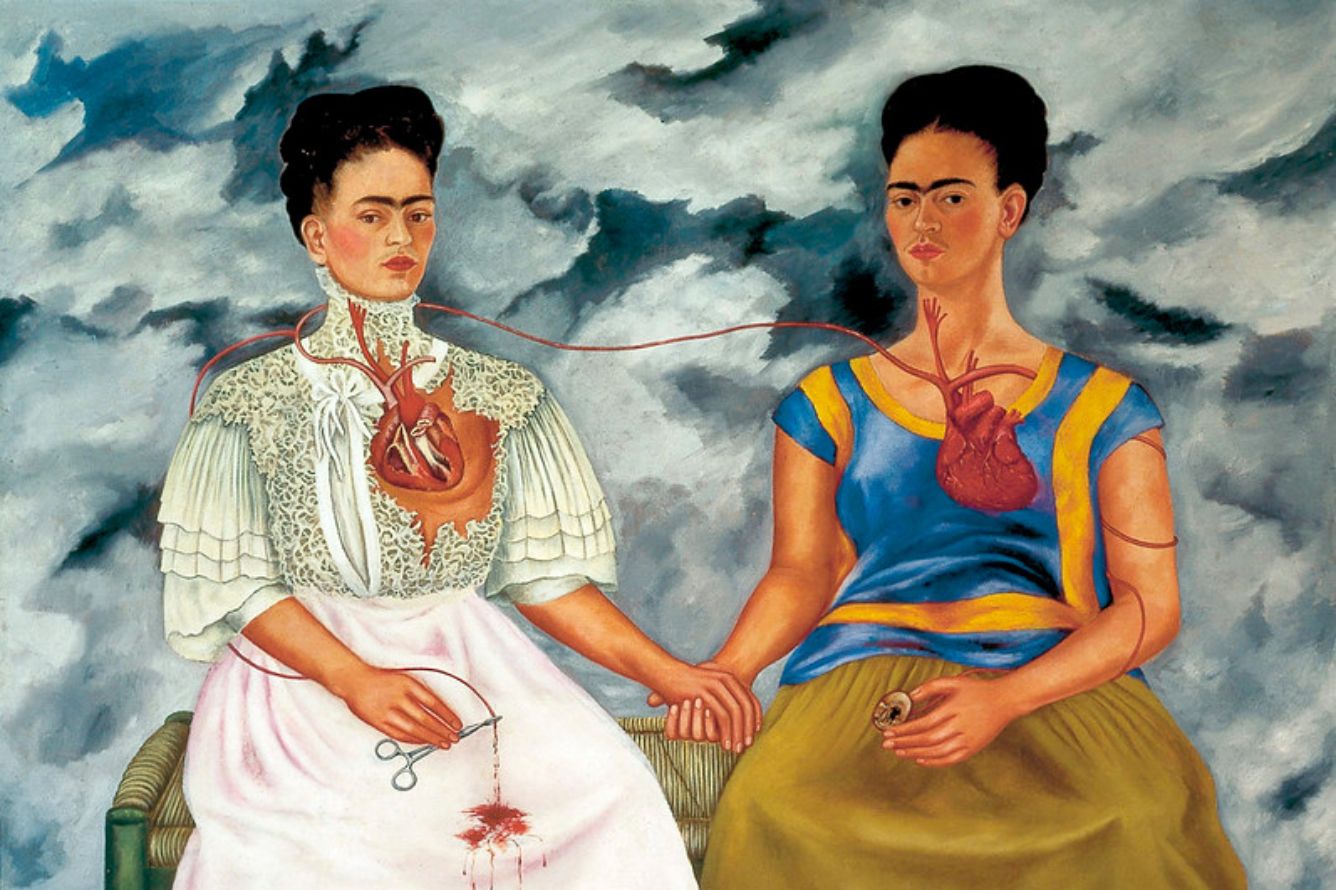
Mexico’s Frida Kahlo is one of the most recognizable artists in the world. Her art and paintings, daily life, and carefully constructed image offer a powerful lens into both the artist herself and the Mexico that shaped her: anti-colonial, politically charged, and creatively electric. Exploring her world in Mexico, from Frida Kahlo museums like Casa Azul to her life alongside Diego Rivera and the politics that influenced her work, reveals why Frida the artist remains so deeply relevant today.
While Frida held only a couple of solo shows during her lifetime, today the self-taught painter from Coyoacán is a global icon. Her work is celebrated in major museum exhibitions, collected for record prices, and referenced across fashion, film, and popular culture. Designers such as Dior and Jean Paul Gaultier have created Frida-inspired collections, Salma Hayek portrayed her in the 2002 biopic, and Madonna counts with several of her paintings.
More than 70 years after her death, Frida continues to draw crowds. Lines of admirers spill out of Casa Azul, her cobalt-blue home in Mexico City. Nearby, Museo Casa Kahlo, which opened in 2025, explores her early family life, while the Tate Modern’s highly anticipated exhibition in London examines her lasting influence and the making of “Frida Kahlo.”
Here are five influences that shaped the life and art of Frida Kahlo:
THE MEXICAN REVOLUTION
Frida was born into one of the most transformative decades in Mexico’s social and cultural history. The Mexican Revolution was a decade-long struggle from 1910 to 1920 that reshaped the nation’s politics, land ownership, and cultural identity, particularly through the renewed recognition of Indigenous heritage. While the Mexican Independence movement a century earlier secured sovereignty from Spain, the Revolution redefined who Mexico was for and who held power within it.
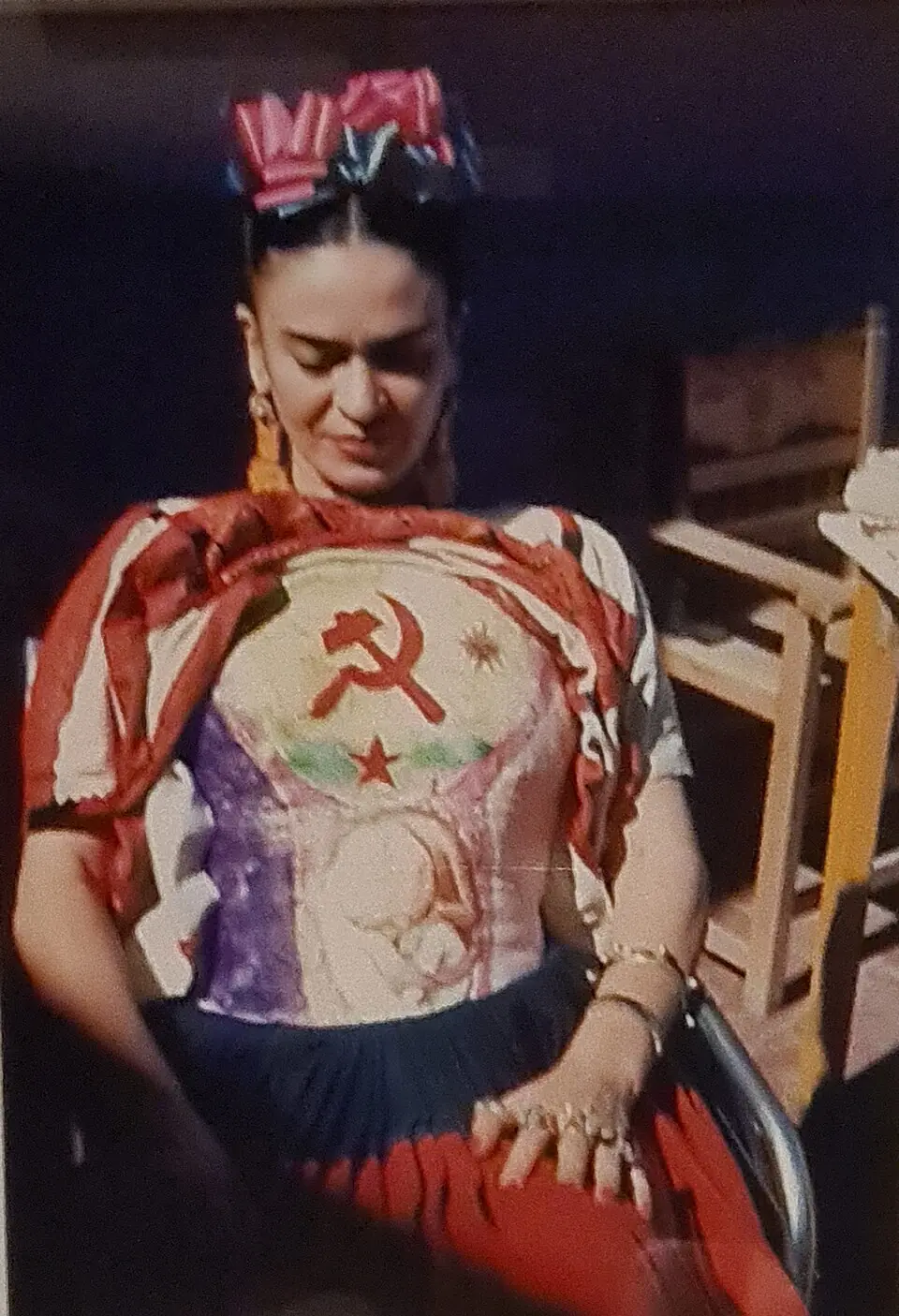
Aligning herself with the cause, Frida adjusted her birth year and proclaimed herself a “Daughter of the Revolution.” She carried its anti-colonial ideals throughout her life, joining the Mexican Communist Party, sharing political convictions with muralist husband Diego Rivera, and offering refuge to exiled revolutionary Leon Trotsky at Casa Azul. Her paintings, public statements, and even her funeral, where her coffin was draped with a Communist flag, reflect a lifelong commitment to left-wing politics and social justice.
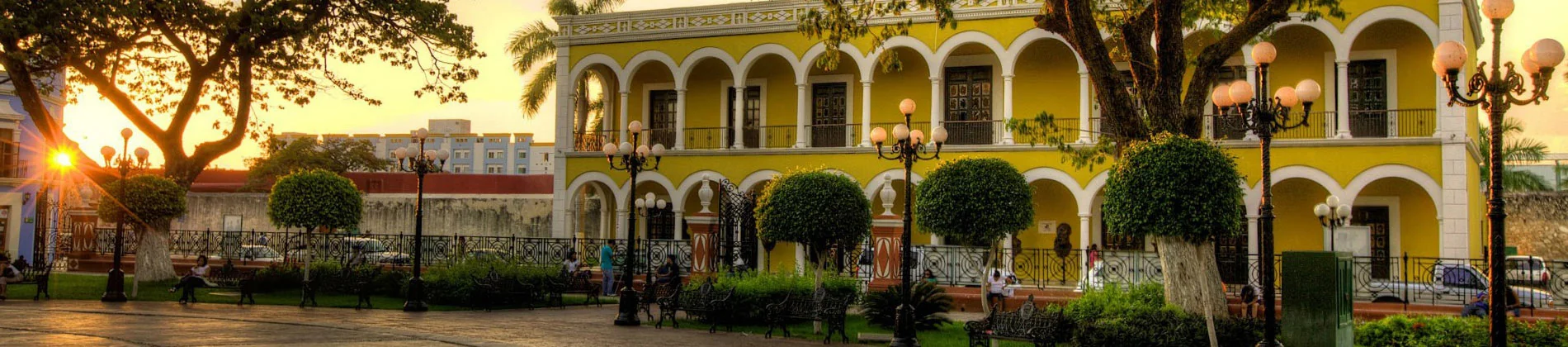
Walking through Mexico City’s historic center, traces of the Revolution appear in everyday ways. Avenida Madero honors one of the movement’s early leaders, while the Monumento a la Revolución houses the remains of figures such as Pancho Villa and Venustiano Carranza. Nearby, Diego Rivera’s murals at the National Palace, Bellas Artes, and Diego Rivera Mural Museum continue to narrate the revolutionary story, celebrating workers, Indigenous communities, and the ideals that reshaped the nation.
PAIN AND THE BODY
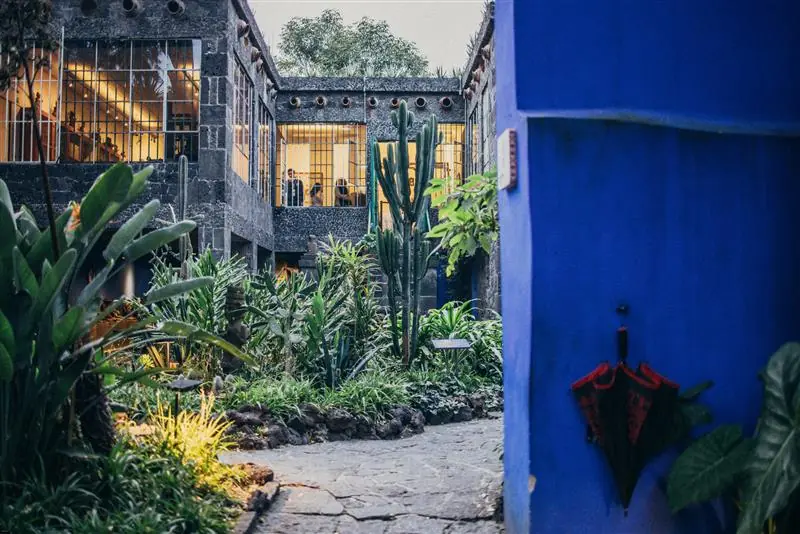
Inside Casa Azul’s beautifully preserved rooms, you are drawn into Frida’s creative world while sensing the pain that shaped her radically honest style of painting.
As a child, Frida contracted polio, which left her right leg permanently shorter and eventually led to amputation in her final years. At 18, a catastrophic trolley accident shattered her spine and pelvis, leaving her immobilized in a full-body cast for months. Frida lived in constant dialogue with pain and death, a reality that gives her work its intensity and emotional force.
In her bedroom, visitors can still see the mirror her mother placed beneath the bed’s canopy, allowing Frida to paint self-portraits while lying on her back. This is where she began to hone her craft, using painting as a way to cope with pain, solitude, and confinement.
In the garden, rotating exhibitions of Frida’s clothing and personal objects reveal how she transformed physical limitations into part of her visual identity. Illustrated orthopedic corsets, floor-length skirts, and her prosthetic leg adorned with a red lace-up boot reflect both resilience and self-expression.
FRIDA’S FATHER GUILLERMO
Mexico City’s new Museo Casa Kahlo delves into a lesser-publicized side of Frida: her family life. Once the Kahlo family home, just doors from Casa Azul, the house-museum displays childhood drawings, family photographs, and personal letters that reveal Frida the daughter, sister, and aunt.
Frida was especially close to her father, Guillermo Kahlo, whose influence on her artistic development is often overlooked. A German immigrant, Guillermo built a respected career documenting Mexico’s landscapes, architecture, and interiors in the early 20th century.
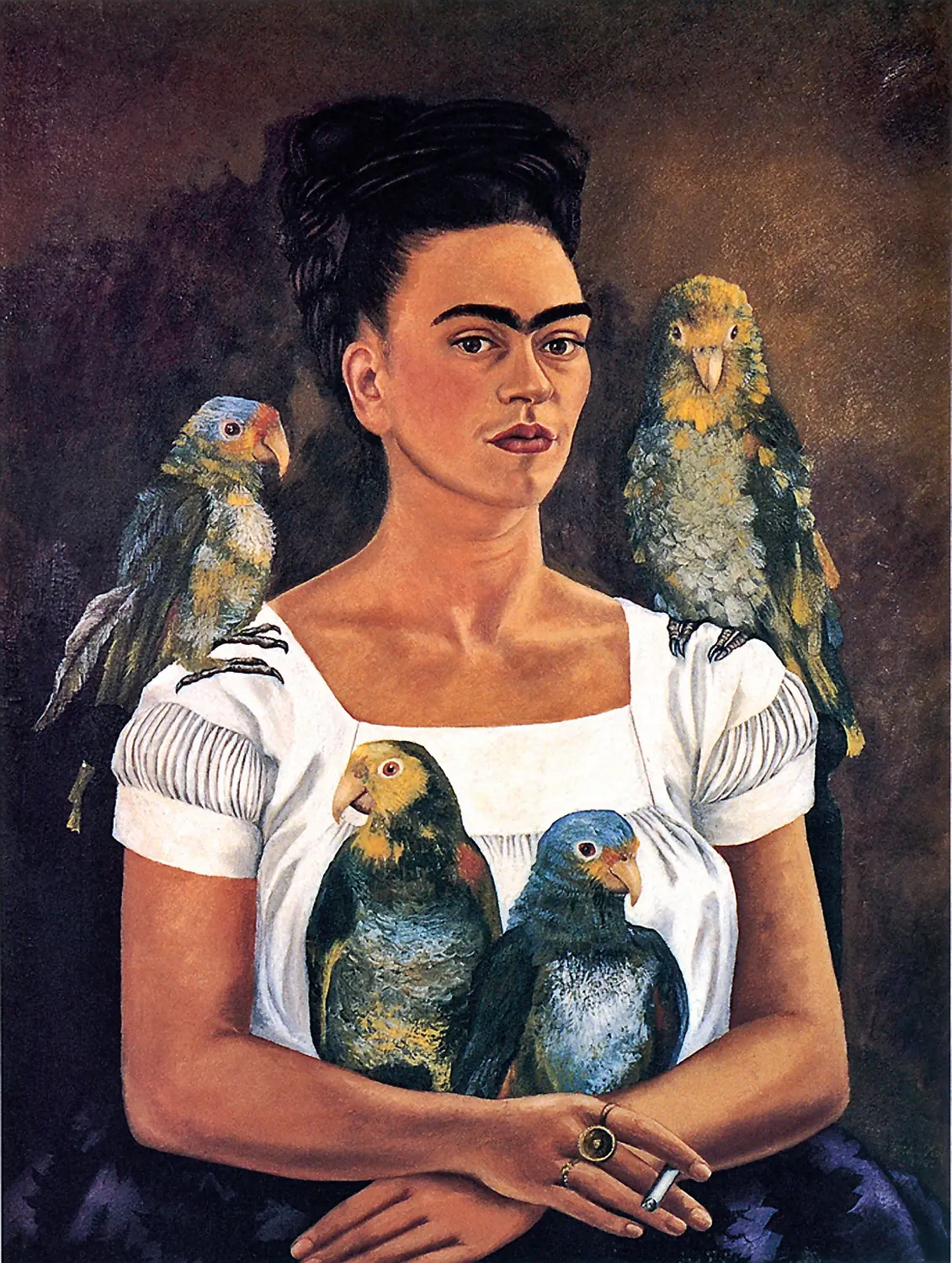
At Casa Kahlo, visitors can see the same darkroom where Frida spent hours alongside him, learning photography, image retouching, and how to pose for the camera. This early exposure shaped the deliberate, frontal quality of her self-portraits, later defined by her own visual language, iconic monobrow, and unwavering gaze.
INDIGENOUS PRIDE
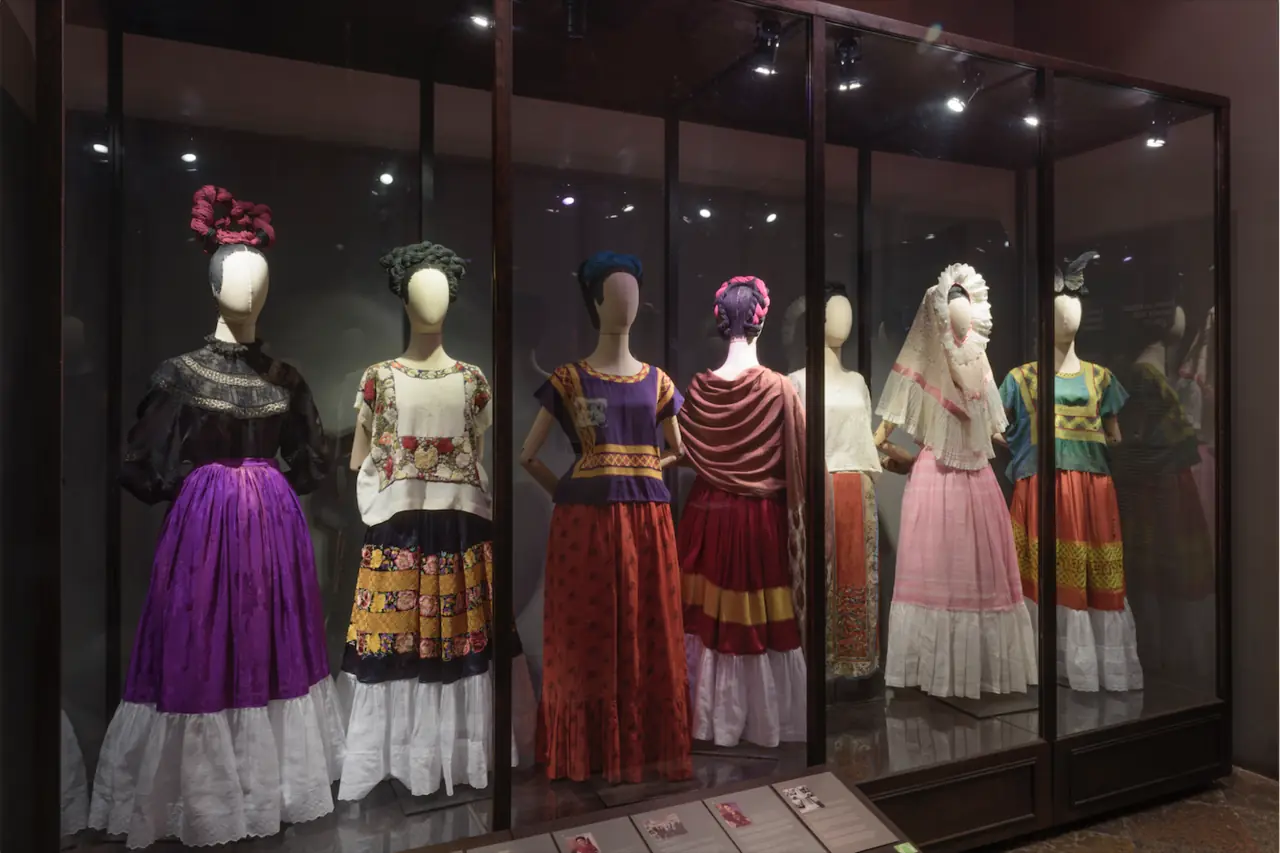
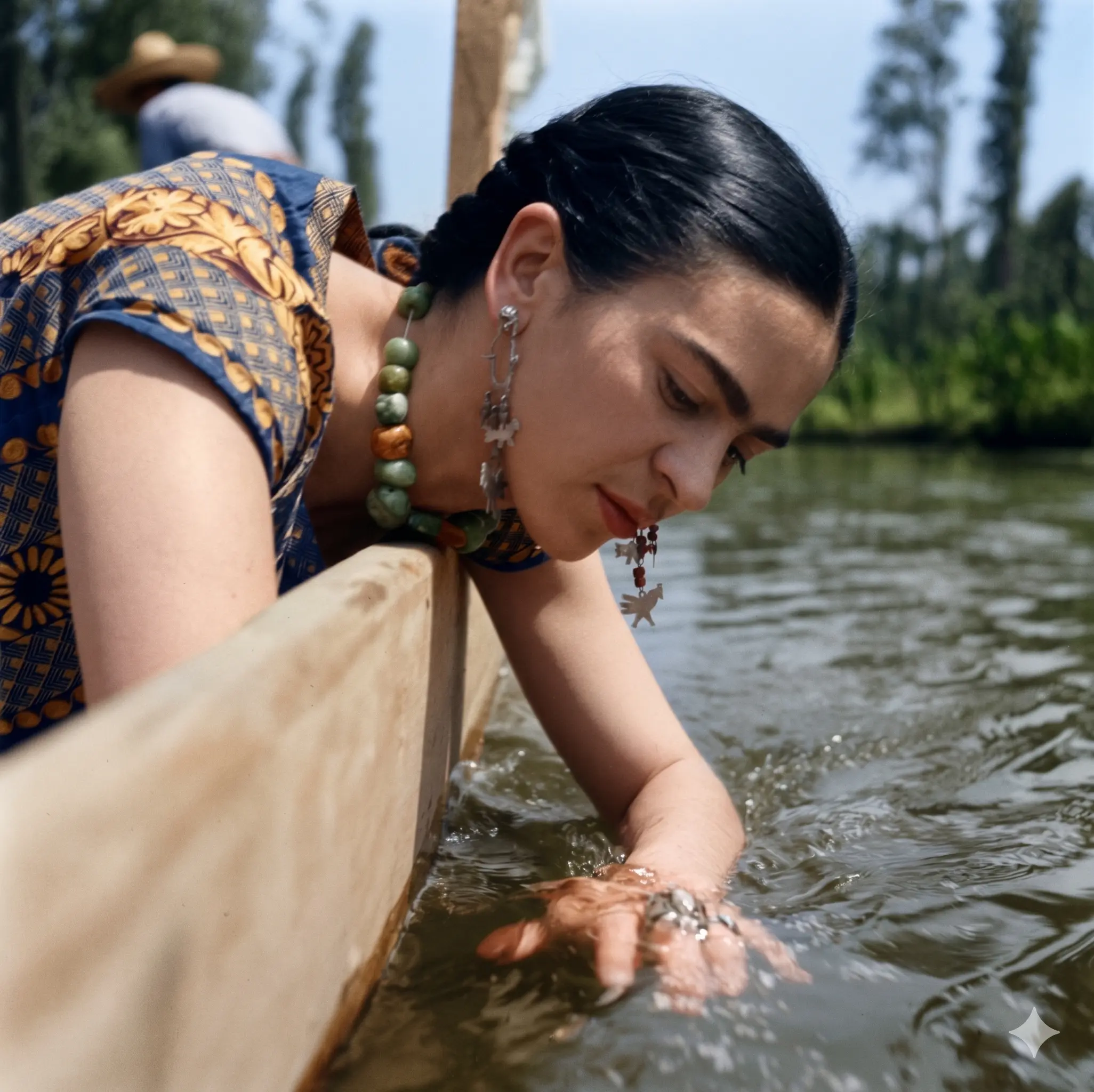
Frida Kahlo’s reverence for Indigenous culture was a lifelong devotion shared with Diego Rivera. Through her bold appearance, art, and daily life, she presented herself as she wished to be seen, using symbolism to express identity and pride.
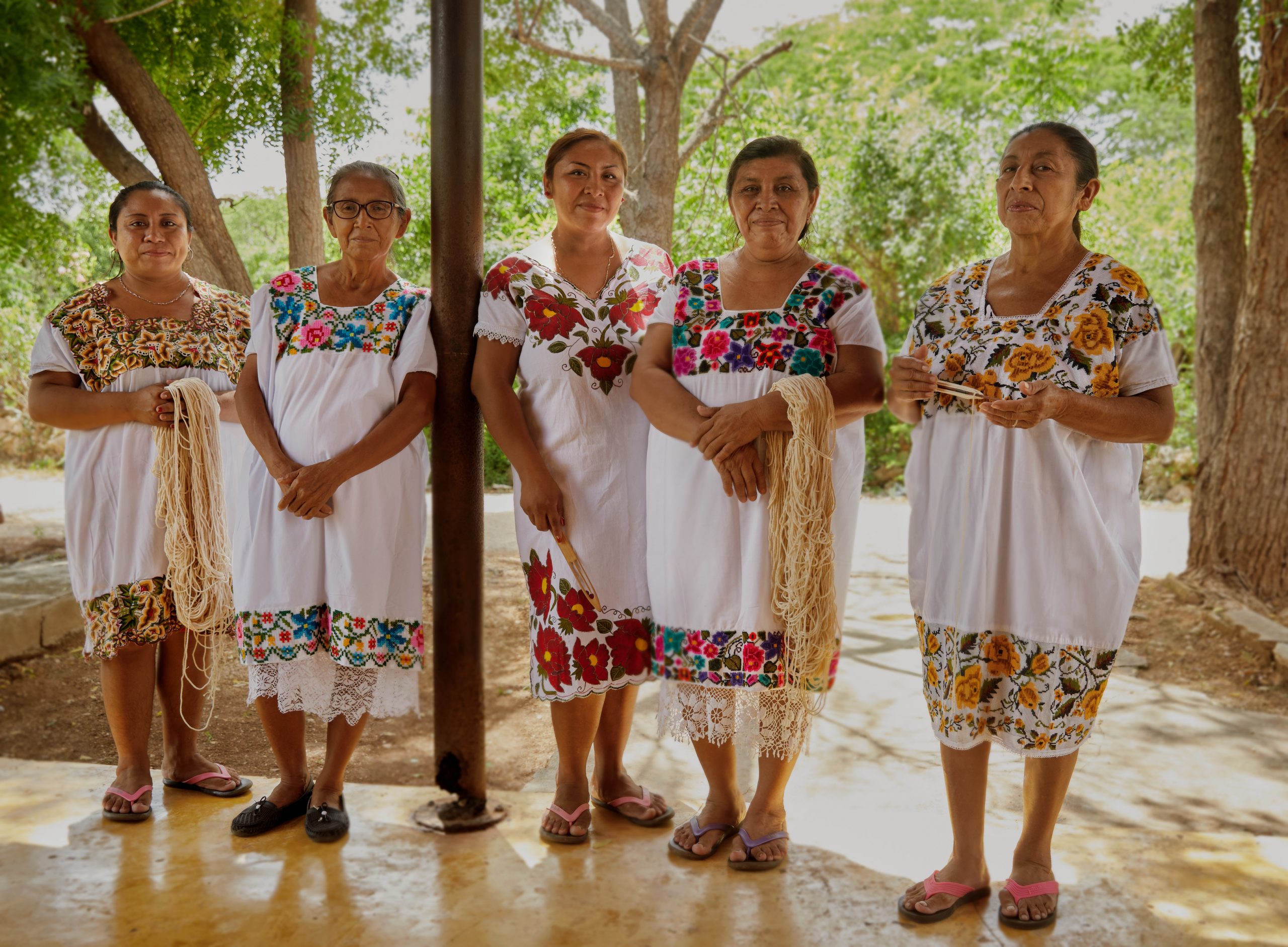
Her choice to wear Tehuana dress appears throughout her photographs and self-portraits. The traditional attire includes embroidered square blouses known as huipiles, long enagua skirts, and braided hair threaded with ribbons and flowers. These garments originate from Zapotec communities in Oaxaca’s Isthmus of Tehuantepec, where women have long held visible social and economic roles. Through this dress, Frida expressed admiration for a living Indigenous culture and aligned herself with a matriarchal tradition that values women as leaders and providers. Across Mexico today, traditional dress remains a symbol of resilience and continuity, linking past and present.
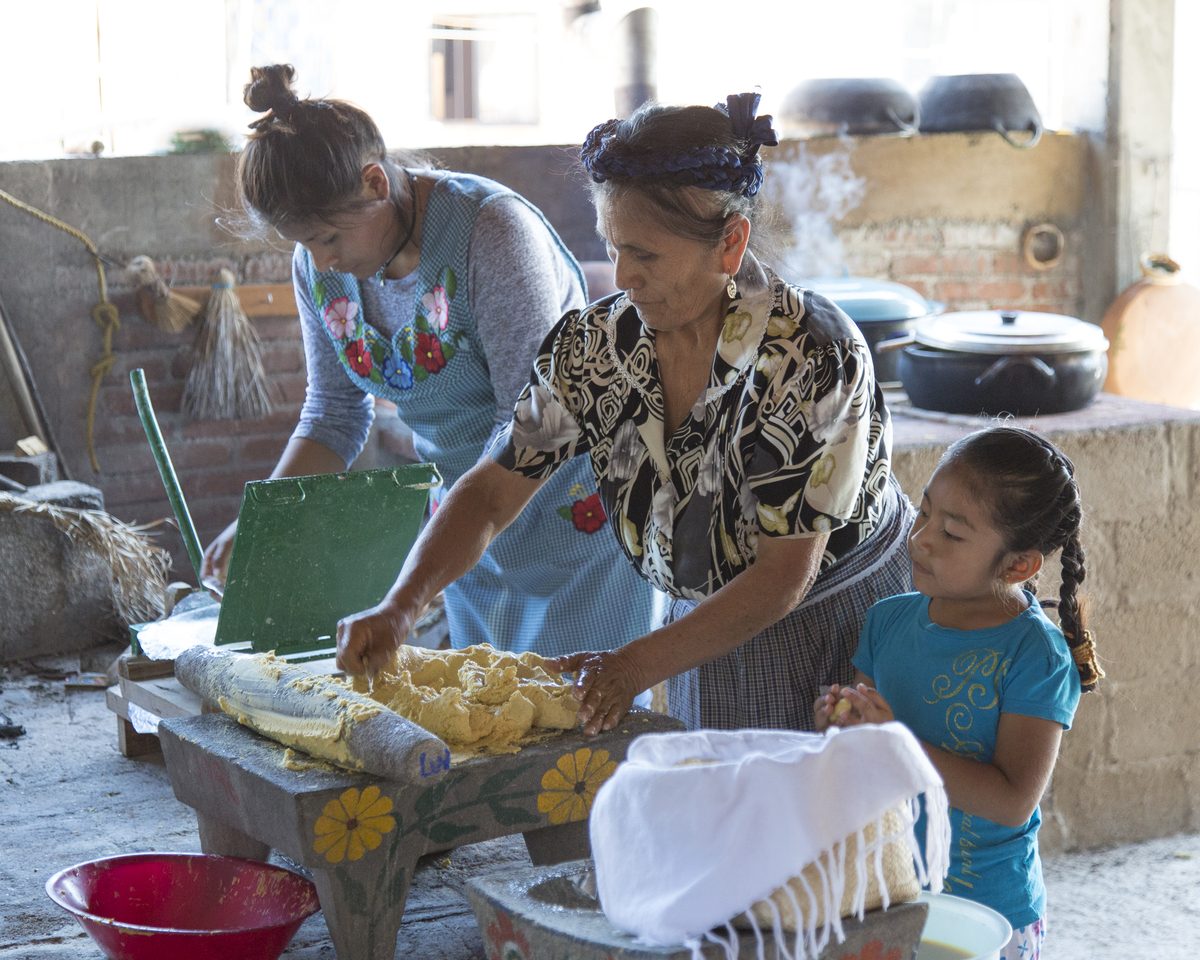
At Casa Azul, Frida lived surrounded by folk art, ex-votos, crafts, and pre-Hispanic objects. The kitchen, filled with vibrant yellows and blues, reflects Mexican handcraft traditions through pottery, wooden utensils, clay cooking pots, ancient metate grinding stones, and a wood-fueled stove. Together with Diego Rivera, Frida believed Indigenous culture formed the foundation of Mexican identity. Rivera’s passion for ancient Mesoamerican relics culminated in the Museo Anahuacalli in Coyoacán, a temple-like space housing his 50,000-strong collection of relics, and dedicated to Indigenous civilizations.
FRIDA KAHLO’S HUSBAND, DIEGO RIVERA
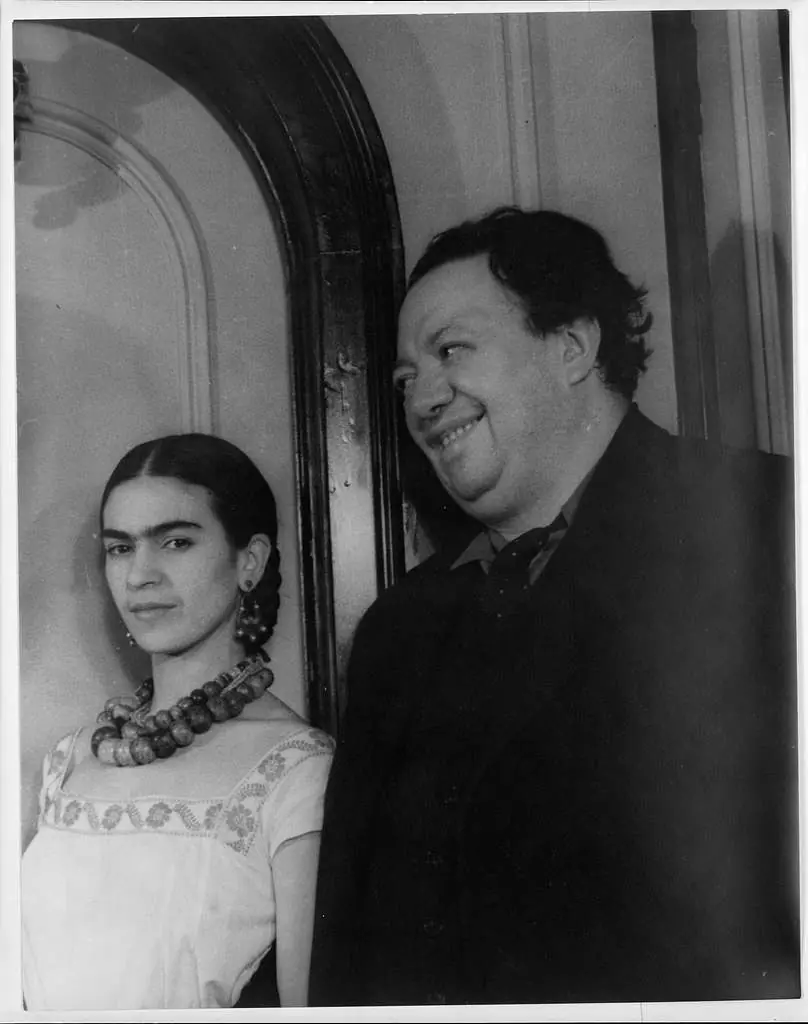
Diego Rivera’s murals still cover stairwells, corridors, and courtyards across Mexico City’s historic center, depicting themes of revolution, oppression, liberation, and Indigenous visibility.
When Frida first encountered Rivera at the Escuela Nacional Preparatoria, she was studying medicine and sought his opinion on her paintings as he worked on a mural. Rivera encouraged her to take her art seriously, and through his work, Frida saw how art could carry social meaning and challenge political ideas.
Through Rivera’s networks, Frida entered artistic and intellectual circles in Mexico, the United States, and Europe, immersing herself in post-revolutionary nationalism and Marxist politics that deeply influenced her work. At Casa Azul, the couple hosted legendary dinner parties where artists, writers, Hollywood figures, and revolutionaries gathered to debate late into the night. At Casa Azul, the couple hosted legendary dinner parties that became meetings of minds, where artists, writers, bohemians, Hollywood stars, and revolutionaries feasted, debated, and talked late into the night.
Their marriage was marked by passion, infidelity, and emotional pain, themes that became central to Frida’s work. Rivera was both muse and wound, shaping her art through love, conflict, and shared ideals.
LEARN ABOUT FRIDA KAHLO’S LEGACY ON YOUR NEXT TRIP
Frida’s impact endures because it was never only about art. It was about identity, pride, and self-definition. Exploring her world in Mexico today offers a deeper understanding of the culture that shaped her, and the spirit she helped amplify.
Find out how to weave immersive connections with both the painter and her Mexico into your next journey, from private access at Casa Azul to exploring Indigenous identity in Oaxaca. Chat to our expert travel planners about your ideas and design a tailormade itinerary created around your pace and passions.