Journey Mexico Blog

Culture Nature Adventure Luxury

Browsing Posts in On the Road

Journey Mexico in Mazatlan

This past weekend, I was invited to a “Tweet-up” in Mazatlan (sponsored by the Mexico Tourism Board) to showcase the destination in a positive way through the power of social media. Mazatlan, on Mexico’s Pacific Coast, was the only major beach destination in Mexico I’ve not yet had the chance to explore, so I was excited about the opportunity. For those not familiar with the concept of a Tweet-up, there are actually several variations of how these events can take place. The most common is when friends on Twitter get together in real life for some sort of event. Our Tweet-up was a little different as many of us invited to Mazatlan had not yet interacted on Twitter, so the focus of the event was to bring us all together to celebrate Mazatlan through a weekends worth of collective Tweets using the hashtag #wevisitmexico.

The weekend itinerary planned for our small yet widely diverse group of tweeters included nightly dinners at some of Mazatlan’s most iconic restaurants and several adventure excursion options. I’ve never been much of the adventurous type while on vacation (I’ve zip-lined in Puerto Vallarta and snorkeled in Cozumel, but that’s about as “extreme” as I’ve ever gotten). One of our day tour options was an ATV expedition and although I’ve never been particularly interested in ATVs and that almost every Mexican beach destination offers some sort of ATV tour, it was either that or another zip-line excursion. I’ve been several zip-line tours already (which, come to think of it, were pretty adventurous) so in the interest of trying something new, I went for the ATVs.

four-wheeling in Mazatlan

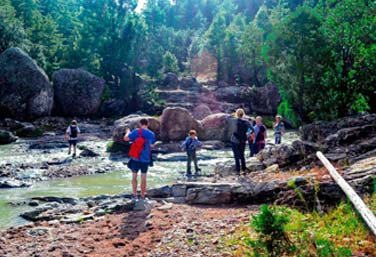
The ATV excursion was awesome! We were a small group of 4, cruising through the terrains of Mazatlan: dirt, rocks, rivers, fields, and even through the small colonial town of La Noria (where we stopped to see a leather factory and old church.) To my surprise, driving the countryside on an ATV (loud as ATVs are) brought me a sense of tranquility. It was like a nice hike through the park or bicycle ride through the mountains – but without all the dreadful exercise! As I passed by field workers who waved and smiled and an old cowboy on horseback nodding to say hello, I was able to clear my mind and appreciate the beauty of the land and the hospitality of the people around me. It was an experience I will never forget, and I regret not having taken part of it sooner. I can only imagine how amazing it would be to ATV through the sandy desert of Baja California Sur or through the Sierra Madre Mountains on the Pacific Coast. The ATV tour definitely left me with a new desire to try more “adventure-like” opportunities as the arise.

The day after ATVing, we took a private yacht to Deer Island, a semi-private beach filled with various water-activities. Again, things like fishing, snorkeling, jet-skiing are all activities I usually dodge; however, the ATV tour definitely left me with a new-found desire to try more “adventure-like” opportunities as the arise, so I both literally and figuratively “dove right in.” The waters of Mazatlan were beautiful and, best of all, I didn’t drown or have a panic attack! It really felt great to step outside my comfort zone and let myself go.

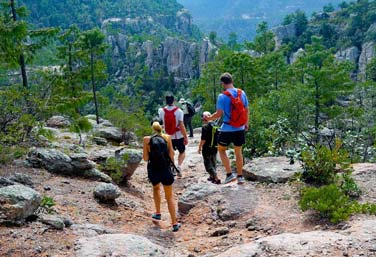
I definitely left Mazatlan with a new level of confidence in myself, which, combined with my unending appreciation for the incredible nature of Mexico, has me aiming high for future adventures. I figure with a few more adventure excursions under my belt, I’ll be ready for next year’s Copper Canynon Semana Santa Trek in April, which looks both intense and amazing.

No matter how much time I spend in Mexico and no matter how many regions I visit, there’s always something yet to discover. This is, without a doubt, my favorite aspect about this country. I went into this weekend not knowing much about Mazatlan and like most everyone else, all I’ve read about the city lately is that their cruise ships have decided to skip the city for the remainder of the year. Yet after just three days in Mazatlan, I can confidently say to anyone that it’s a safe and gorgeous city of culture, of adventure, and of beautiful and warm people. When I think about our experience in Mazatlan, I’m reminded of Mexico’s new slogan: “Mexico, The Place You Thought You Knew,” which is especially fitting as I know there are many who have a wildly misconceived idea of not just Mazatlan, but many of the cities of Mexico that I’ve come to love.

dragon alebrije in oaxaca

#MexicoToday – During our recent visit to Oaxaca for the Mexico Today program, Chase and I experienced a  total cultural immersion. Visiting the ruins of Mitla, learning about Zapotec ancestry and experiencing La Calenda and La Guelaguezta – every minute of the trip our senses were captivated. The sights of all the colorful dresses, the sounds of the band leading the parade, the taste of the finest Oaxaca cheese, the smell of rich mole, and the feel of everyone’s vibrant energy radiating, all combined to make Oaxaca astounding.

Because Oaxaca is so rich in culture, it serves as a well representative of Mexico as a whole; however, one craft in particular has come to represent the spirit of Oaxaca: the Alebrije. Alebrijes are carved and painted animal figurines that have become a form of symbolic art important to the existence and development of the small villages that produce them. The word alebrije means “imaginary” or “fantasy,” describing a style of animal carvings with exceptional paint schemes. There are 3 main villages that are known for producing these colorful figures and luckily enough, a visit to San Martin Tilcajete was part of our program. The role alebrijes play in the local culture of Oaxaca was immediately evident upon entering the small village as the giant entryways were painted in the brightest of neon colors and doors were carved in the shape of whimsical animals.

When we arrived to the workshop of Jacobo and Maria Angeles (renowned masters in the art of carving and painting) , it was clear that San Martin Tilcajete were proud producers of the Alebrije. Unlike modern workshops, the Angeles family does not use synthetic paints, rather natural colors derived from nature. The skills to create these masterpieces were passed down through the family; Jacobo gained proficiency in wood carving from his father and Maria came from a line of painters.  A progressing art continually altering due to demand, Jacobo and Maria have developed their skills in the intricacy and variation of each piece, raising the bar of quality for other villagers.

Alebrijes found outside of Mitla

Once I returned home from Oaxaca, my stimulation and interest for alebrijes grew as I stared at my hummingbird alebrije made by Jacobo. I was interested in how to distinguish a “true” and “authentic” alebrije as the work produced by the Angeles family was not duplicated or common. You can buy Oaxaca alebrijes all over Mexico in all different design styles, but how can you tell an imposter? The truth is, there is no one way an “authentic alebrije” should look. Alebrijes actually originated in Mexico City and were made of paper mache, trickling its way to Oaxaca, the art manifested into wood carvings and the name remained ‘alebrejies’. What is traditional and authentic is the carving of the copal wood. The extent of quality or design does not diminish its authenticity; it’s purely a unique work of art.

That being said, there are those who have tried to replicate and mass produce the alebrije out of foreign materials in foreign countries like China. When Jacobo Angeles realized that some of his customers where actually trying to exploit his craft, he started a legal battle to protect the native ritual, which he is still fighting today. Speaking at a panel discussion during our visit, Jacobo explained to us that his goal is to establish an official stamp of authenticity to be used not just for alebrijes, but for all traditional Mexican crafts.

For those interested in learning more about Jacobo’s alebrijes and his fight to preserve his family’s tradition, please visit tilcajete.org.

Alebrije’s continue to gain popularity as collectors and tourists from all over the world are drawn to the beautiful pieces. As with any piece of artwork, each carving tells it’s own story and it was truly a fascinating experience be able to visit one of the workshops and meet the carvers and painters. Oaxaca has many traditions it preserves and there is no better way to discover some of Mexico’s best customs than starting with Oaxaca.

The Spirit of Tequila

No comments

The Spirit of Tequila

#MexicoToday – The fiery drink of Tequila has been rapidly gaining international popularity for years now, being featured in popular billboard hits and increasing in US consumption by 45% in the past 5 years. So it comes as no surprise that the town of Tequila, birthplace of the most representative beverage in Mexico and the proud producer of the worldwide spirit that bears its name, has also been gaining more and more attention. Recently, ABC, MSNBC, and USA Today all ran an article about this small town in Jalisco, Mexico – about 4 hours east from the popular tourist city of Puerto Vallarta (just outside Guadalajara, part of Mexico’s Colonial Heartland).

This acclaimed Magic Town sits against the Tequila Volcano which overlooks the valley encompassed by endless landscape of perfectly lined of blue agave plants. Built around Tequila’s main square of beautiful fountains and fresh flowers are the distilleries of popular producers such as Sauza and Jose Cuervo. Visiting the town of Tequila is a trip to the past, where the traditions and the most authentic aspects of Mexico are still alive and prevalent.

Curious about this traditional and legendary drink, I took the trip to discover Tequila for myself.  Starting off with a visit to the 17th Century stone Santiago Apostol Church and a walk around the flourishing plaza, I filled my stomach with the juiciest Torta Ahogadas (pork sandwiches drowned in a spicy red sauce – famous to the Guadalajara region) before enjoying a small tequila to get in the right mindset. What many people do not know is that tequila is not something that should be taken as a shot. Rather it should be treated as a fine wine, acknowledging the various aromas and savoring ever nuance in flavor.

Appreciating the smells and tastes of the actual liquid is one thing, but a true appreciation of Tequila comes from seeing the process of its creation from start to finish. I learned this during my tour at Mundo Cuervo; where in a small VIP group, we visited fertile agave fields, wandered through picturesque courtyards of the hacienda and toured the actual production factory. With the largest distillery in Latin America, the Cuervo brand started distilling a private tequila called ‘Reserva de la Familia’, reserved only for the Cuervo family. As time went by, they decided to share a very limited amount which is exclusively made in Mundo Cuervo, housing only barrels of Reserva during a specific season. I was able to try a very small sample of this limited edition tequila, and not exaggerating, it was one of the best Tequila Anejo’s I had ever tasted.

tequila barrels

At the end of the tour, we learned how to distinguish quality tequila – much like you can distinguish a fine wine. One way is to swivel the tequila around in a glass and notice if any drops stick and form along the glass, the more droplets that adhere to the glass, the better the tequila. The other way, which I found most fascinating, is that Tequila has three very distinct scents depending on which part you smell.  Starting at the bottom portion of your glass, this is the scent where you appreciate the key ingredient, the aged agave plant, distinguished by its pungent scent of alcohol. Moving up to the middle portion, it is differentiated by a sweet fruity floral smell, much less harsh than the fragrance at the bottom. Reaching the top one-third portion of your glass, the aroma changes from a nice spring day to a warm cozy fire, emitting a rich wood smell due to the aging process in the barrels. Detecting and savoring each scent and learning about the long process and stages it makes to produce tequila, I developed a strong appreciation and understanding of the intricate process.

After a 3 hour tour around the facilities and numerous taste testing and margaritas (complements of the tour), I headed to the National Tequila Museum where, through its collections, I gained an even deeper understanding regarding the cultural values of the tequila region, which I learned was recently declared a World Heritage Site by UNESCO.

Reflecting on my day trip, I learned more about Tequila then I ever thought imaginable, both the drink and the town. Both are unique and representative of the country in which they reside. Having only spent a day in Tequila, there’s still more to discover. The town has many “tourist friendly” facilities and tours, including the infamous Tequila Express train ride and the giant tequila bottle-bus city tour – which are on my list next time I am driving through!

It took a while to get through all the photos, but here are the highlights from a recent trip through Central & Southern Mexico. You can turn the captions on and off by clicking the little speech bubble at the bottom left of the slideshow. Clicking a photo will take you to full sized version in our Picasa album. Let us know if you’ve been to any of these places or seen any of these things in person!

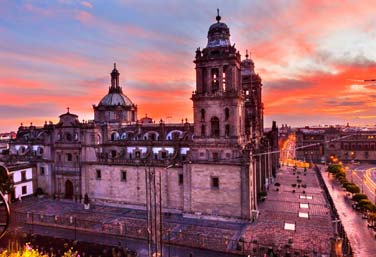
On a recent trip through Central & Southern Mexico, I had the opportunity to visit the gorgeous cathedral on the zócalo (the main square) in Mexico City, where I came across an interesting tradition of which I’d never heard.

I was actually on my way out of the cathedral when I passed a little table that seemed to be overflowing with red ribbons. As I was passing, a woman approached the table with another red ribbon in one hand but with a small metal lock in the other. Intrigued, I stopped and watched as she parted some of the ribbons revealing a metallic grid around which she clenched the lock she was carrying. She then took the ribbon, tied it to the lock, said a little prayer, and then left.

Now I was really intrigued. Stepping forward, I realized the the ribbon she had tied to the lock had someone’s name written on it. Confused, I turned to our Journey Mexico guide, Juan Carlos, who was already laughing at my bewilderment. “The ribbons tied to the locks,” he explained to me, “are placed here to stop people from gossiping against us. If you feel that someone is gossiping or speaking ill about you, you write their name on a red ribbon then tie it to a lock you’ve secured to this table.”

Apparently, once you’ve tied a ribbon to your lock, Saint Ramon Nonato, the patron saint of pregnant women and gossip and whose statue sits behind the table, sees to it that your slanderer is quieted. Needless to say, many in our group approved of this tradition and went looking for ribbon.

During recent travels throughout Central & Southern Mexico, I had the chance to visit the capital city of Yucatan, Merida, with which I was very impressed. Located just off the coast of the Gulf of Mexico and home to almost a million people, Merida makes the perfect launching point for excursions to many of the ancient Mayan archeological sites in the area. As impressed as I was with Merida, however, I was even more impressed with the level of privacy, tranquility, and luxury offered at a local hacienda located just minutes from the hustle and bustle of the capital.

Hacienda Xcanatun

Hacienda Xcanatun in Ruins

Hacienda Xcanatun was originally constructed in the 18th century to cultivate corn and raise livestock but eventually began growing and processing sisal, which is strong fiber from a type of agave plant that was used to make the twine and rope that brought the Yucatan unprecedented amounts of wealth towards the end of the 18th century. Unfortunately, the introduction of synthetic replacements for sisal left Hacienda Xcanatun and most other haciendas in the Yucatan in a decline to ruins. In 1995, however, experts in Colonial and Mayan architecture worked together to rebuild Hacienda Xcanatun into the remarkable property it is today.

Suite Patio

Entering the hacienda is like entering another world altogether. I had a hard time comprehending how we could be just minutes from downtown Merida yet hear nothing but the birds and fountains of the property. The staff of Hacienda Xcanatun gave us a wonderful tour of their many levels of suits and rooms, which were all truly impressive. It is obvious that the owners took great care and paid great attention to even the most minute of details in each room. One suite has a wrought iron spiral staircase inside leading to a second bedroom and others have jacuzzis made of stone in the bathrooms!

Suite Bathroom

After our tour of the property, we were treated to a special five-course lunch at Casa de Piedra, Xcanatun’s restaurant, as guests of owners Jorge Ruz and Cristina Baker who, in turn, requested that chef José Vázquez (one of the most skilled chefs in Mexico) host them in their absence. Casa de Piedra was selected as one of the top 50 restaurants in Mexico by the American Academy of Hospitality Sciences based in New York City, and has been the recipient of the Academy’s Star-Diamond award for excellence over the past eight years. After looking at the photos below, it’s needless to say that the meal was spectacular! In addition to the savory food, the ambiance of the room was both elegant and comfortable, and we were treated to live music as a local pianist who played wonderfully as we dined.

Gourmet Tostada

Seafood Ceviche

Chocolate & Caramel Cake

JM President Zachary Rabinor with chef Jose Vazquez

On behalf of Journey Mexico and our group of international travel experts who were on the trip, many thanks to the Hacienda Xcanatun for such a wonderful day! For more information about the Hacienda Xcanatun, please contact us at info@journeymexico.com.

This is a guest submission written by Joel Duncan of Adventure Jo during his travels to the San Marcos Fair in Aguascalientes, Mexico, which is held from the second week in April until the first week in May

AGUASCALIENTES, MEXICO – “Hey bro where are you from? I’m from Chicago and I’m here with my wife and my buddy from college”. “I’m from Canada”, I replied to the sunburnt man dressed in a baseball cap, shorts, sneakers and an oversized t-shirt. His eyes gleamed with excitement as he confessed that I was only the second English speaker he had met in his three days at the San Marcos National Fair in the Colonial Heartland.  He furthered to say that the only reason he knew about the fair was because his wife was born in Aguascalientes. As I scanned the faces of the lively sea of people drinking, dancing and parading through the busy streets, I felt selfishly satisfied, that I had stumbled upon something truly Mexican.

Two days earlier, I checked into La Katharina Hostel, a relatively new hostel only steps away from the iconic Jardin de San Marcos (San Marcos Garden), the gateway to the heart of the fair.  I was the only foreigner in my 6-bed dorm room – no Aussies, Canadians, Israelis or Americans; as a matter of fact, I was the only foreigner in the entire hostel. When I pictured going off the beaten path, I envisioned traveling to an undiscovered village in the foothills of the Sierra Madre Mountains, not to Mexico’s biggest and most important fair.

More than 100 years ago, The San Marcos National Fair (dubbed Dreamland by its organizers) started off as an event to promote livestock and other products from Aguascalientes.  Today, the fair is said to attract an estimated 7 million tourists over a 3-4 week period. Although livestock is still an important part of the fair, it isn’t what continues to lure millions of predominantly Mexican tourists to the small industrial state. The fair’s organizing committee has created a culturally rich program that is aimed at the entire family and showcases the music, theatre, art, dance, and literature of hundreds of Mexico’s artists. Most of the organized events are free and are hosted in museums, galleries, and stages set up around the city, so a good pair of walking shoes and camera is all that’s needed.

Bullfight at San Marcos FairSome of the more popular attractions include the bullfights, cockfights, a casino, and of course – the parties. I skipped the cockfights and casino but decided to go to my first bullfight, in hopes of having a real cultural experience.  With a seating capacity of 15,000 people and an incredible construction time of only 48 days, the arena was nothing short of impressive. Passionate screams of ‘Ole’ and continuous whistling could be heard as the animated matadors teased and evaded the infuriated bulls. Although I enjoyed the energetic atmosphere of the arena, I only stayed for a half-hour, as my stomach and conscience could no longer handle the very one-sided and bloody battles.

When the sun went down, the party turned up, and although there are numerous posh nightclubs and bars, the biggest bash happened right in the streets. The sounds of tamboras (drums) and trumpets filled the air as Mariachis and Norteñas competed for the attention of those eager to dance the popular polka-infused banda. A cold cerveza was always in reach since during the festival, drinking in the streets is permitted (or should I say encouraged). Countless small stands lined the streets, serving up 1-litre cups of just about any alcoholic beverage the heart desired.  Second to the popular micelada (spiced up beer), my personal favorite was the appropriately named “Bomba” (bomb) – a tasty but undoubtedly potent concoction of several types of alcohol.

The organized events were spectacular but what I enjoyed more was the abundance of talented artists and performers, who brought the city streets to life. I never had to stray far from my hostel door to find someone preforming magic tricks, dancing, playing a musical instrument or entertaining crowds of onlookers with their own artistic talent. The owner of a small restaurant and 25-year resident of Aguascalientes explained why he loves the fair: “The fair brings families together. People who usually only come into town once a month come in several times – and they get all dressed up. The fair gives children more opportunity to spend quality time to with their fathers. I usually visit my family in other parts of Mexico, but when the fair comes, they make their way to little Aguascalientes.”

Traveling as a foreigner in Aguascalientes was very easy and enjoyable since everyone seemed to be curious about where I was from and how I had heard about Aguascalientes. Although it wasn’t necessary, knowing some Spanish certainly helped me to meet more people and get the inside scoop on what events were taking place. If you’re planning a trip to Mexico with your family, friends or like me – solo, and you want a crash course in the country’s culture, art, food, music and fiestas (parties), consider visiting Aguascalientes for next year’s San Marcos National Fair – you won’t be disappointed.

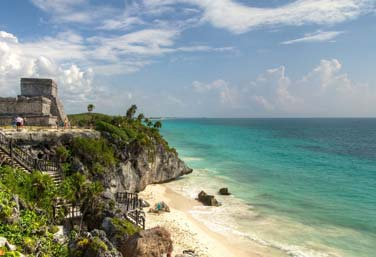
After a quick breakfast at Maroma, we set off for the coastal archeological site of Tulum. Going into the visit, I had the idea that Tulum consisted of only one structure on a seaside cliff, but I was pleasantly surprised when we arrived as there are many ancient homes and pyramids at the site. Our expert guide illuminated the site for us and taught us how to distinguish between what was a home and what was a temple by looking at the structure of the ruins. Of course, the brilliantly turquoise waves lapping the beach below (where you’re welcome to go for a swim) made Tulum especially nice to visit.

On the coast at Tulum

After Tulum, we had an emotional goodbye with our beloved driver, Pedro, who over the course of the past fifteen days, has become both a good friend and bodyguard to our group (not to mention that he’s got to be the best/coolest bus driver in Mexico!).

What a great group!

The rest of the day was spent inspecting some incredible private villas and boutique hotels on the Riviera Maya, ending at our final location, the fabulous Esencia, where we shared one last, delicious group dinner. As we reflected over our final meal together, we realized just how special it has been to travel with such an international cast of characters. In total, our group represented nine countries: Mexico, the US, England, Australia, Hong Kong, Singapore, Belgium, France, and Italy! I’m confident I speak for the group when I say it was an incredible pleasure to spend 14 days getting to know the customs and traditions not only of Mexico but of each other’s countries as well. I’m not even out of the airport and I’m missing everyone already! Hopefully some of the group members will send us a personal review of the trip so that you can get to know them as well. Until then, stay tuned for more photos and video from the trip!

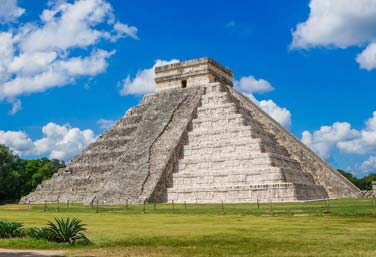
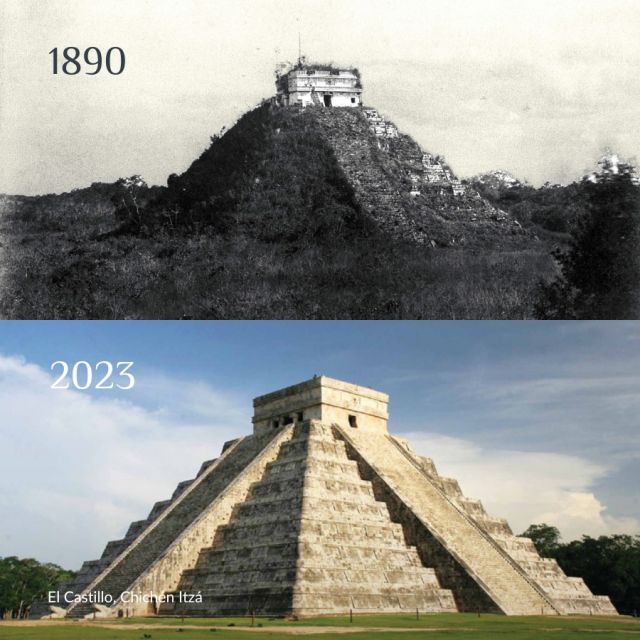
Today began with a very special morning as we awoke at 5:30am for private visit and guided tour of the archeological site Chichen Itza. With it’s massive ball court and one of the most impressive pyramids in all of Mexico, Chichen Itza is one of the most visited archeological sites in the country. Having the opportunity to visit the site with no one but a small group of your friends as we have become on this excursion through southern Mexico was a privilege indeed.

Chichen Itza in the morning

The name Chichen Itza means “the mouth of the well of Itza,” referring to the cenote of Itza. The Yucatan peninsula is a very porous land mass covered in natural sink holes called cenotes, which were essential to the ancient Maya for both their physical and spiritual needs. After our visit to the archeological site, we were able to cool off in a local cenote before heading off to the Riviera Maya.

Cooling off in a cenote

After several site inspections in the Riviera Maya, we met for dinner at one of the restaurants at the luxurious Rosewood resort, where we stayed for the night. At dinner, we celebrated the birthday of one of our group members, Steve from Singapore. I don’t think I’ve ever seen such a special birthday cake ceremony as Steve was sung “Happy Birthday” in seven different languages by our international group!

Happy Birthday Steve!

Tomorrow is a day of nothing but site-inspections, but stay tuned for the final day of our trip when we’ll visit the picturesque archeological site of Tulum!

Go to The Final Day >>

Hacienda Uayamon

Day ten was a day of luxury. Waking up at the gorgeous Hacienda Uayamon, we had breakfast and then relaxed by the pool, which was surrounded by the ruins of one of the buildings on the property. In the height of its prosperity, the Yucatan Peninsula made a fortune in the creation and sales of a certain type of rope. When synthetic replacements came along, the area fell into ruin, leaving many of the haciendas (basically plantations) abandoned. Today, Starwood has restored several of these haciendas into the most fabulous, private, and luxurious hotels you could imagine. After leaving Uayamon, we were fortunate enough to stay in another hacienda property, Hacienda Santa Rosa, the following night!

The pool at Uayamon

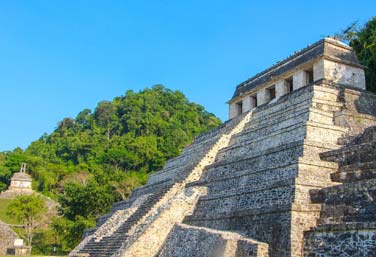
After breakfast at Santa Rosa, we set out for an expertly guided exploration of the archeological site Uxmal, which many consider to be one of the finest examples of classic Mayan architecture. We were lucky to have a perfectly sunny afternoon at Uxmal, allowing us to get some surreal photos from the site.

Pyramid at Uxmal

From Uxmal, we traveled to Merida, the capital city of the Yucatan. Upon arrival, we visited the Governor’s Palace, where our Journey Mexico guide Alex explained the significance of the giant and moving murals that line its halls. Each mural plays a part in the history of Mexico, and several of the depictions of what the Spanish did to the natives were tough to view.

Spanish torture mural

From the palace, we visited Merida’s most extravagant street, which is lined with massive mansions built in the style of the French. On this street, we visited the super-chic boutique hotel Rosas y Xocolate. If you have a girlfriend or wife who likes pink and chocolate, trust me, she would die to stay here.

Rosas & Xocolate

Moving on from Merida, we journeyed to the magical town of Izamal, the “Yellow City,” where we visited the convent where the Spanish Bishop Diego de Landa Calderon burned many of the Mayan codices and images, effectively erasing much of Mayan history.

The Monastery at Izamal

From Izamal, we traveled to our final destination of the day, the Lodge at Chichen Itza, which is a hotel literally a stone’s throw away from the archeological site. It was originally built to house the first archeologists from Harvard University to excavate the site. Stay tuned for a report on what we saw tomorrow!

Go to Day 12 >>